
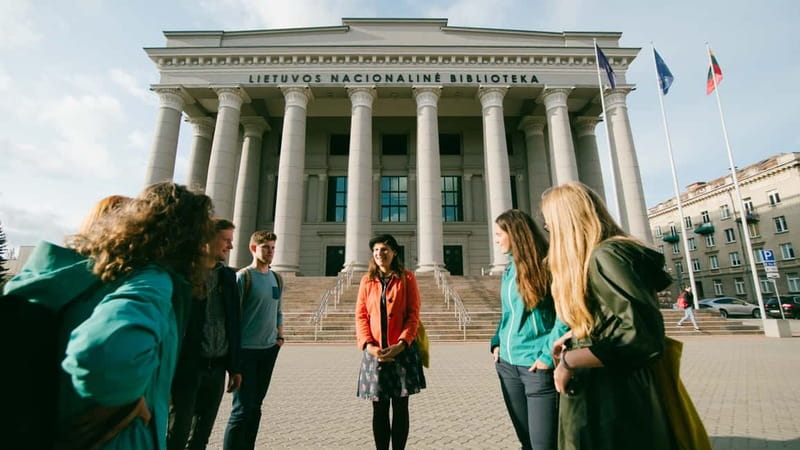
Reviewed · SOVIET VILNIUS TOURS
Vilnius: Regular Walking Tour of Soviet Vilnius
Soviet Vilnius is not just a style. It is a living record of politics, daily life, and how Vilnius rebuilt its identity after occupation, told through brutalist architecture and real human stories. I like that the tour doesn’t just point at buildings, it explains why they were there and what they meant for ordinary people.
You also get a clear emotional hit at Lukiskiu Square near the KGB Museum, then a steadier path toward 1991 independence. One consideration: you should expect lots of walking, and the tour explicitly warns it is not recommended for people with limited mobility.
In This Review
- Quick take: what makes this tour work
- Where this tour starts: Cathedral Square and Gediminas to the Soviet edge
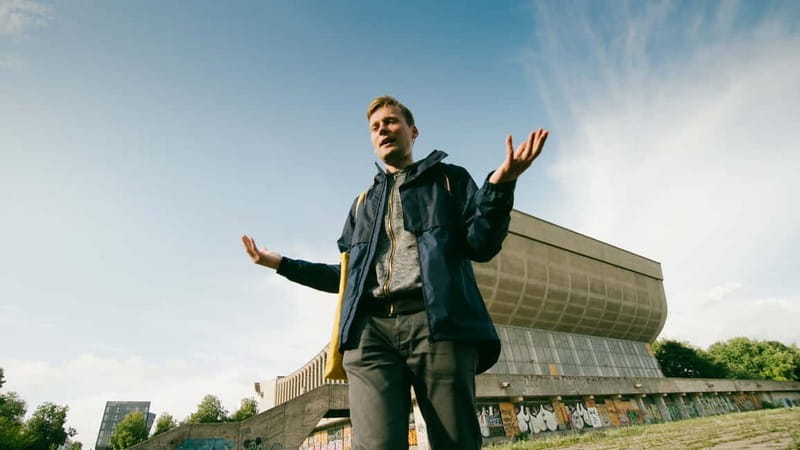
- The Palace of Concerts and Sports: brutalism with basketball courts and propaganda-era scale
- Walking along the river toward the Green Bridge after the statues came down
- Lukiskiu Square and the KGB Museum area: when the city turns serious
- Former Lenin’s Square: renamed space and the politics of public memory
- The final walk to Seimas: linking 1991 independence to a specific place
- What to expect from the guide: personal stories, humor, and strong English
- Walking level, pace, and comfort breaks: how hard is it really?
- Price and value: why $24 for 2.5 hours can make sense
- Pairing ideas: how to connect Soviet Vilnius with the rest of your day
- Who should book, and who should skip
- Should you book Vilnius Regular Walking Tour of Soviet Vilnius?
Quick take: what makes this tour work
- Brutalist Soviet landmarks told as everyday places, not museum props
- Lukiskiu Square and the KGB Museum area with hard, specific stories
- Green Bridge views plus context on Soviet propaganda statues that were removed
- Former Lenin Square and how independence changed the meaning of public space
- Ending at Seimas with a map link to the 1991 defense of independence
- English live guides who mix humor, serious context, and personal family memories
Where this tour starts: Cathedral Square and Gediminas to the Soviet edge
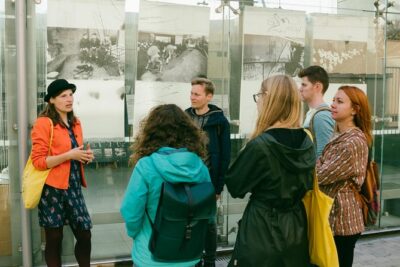
The tour begins at Cathedral Square, right by the Gediminas monument. The meeting point is easy to spot: look for the guide with a yellow bag and a yellow Vilnius with Locals Tours sign.
From there, you move out of the Old Town and toward the Soviet-era parts of Vilnius. That shift matters because it changes the questions you are asking while you walk. In the Old Town, you usually ask what you are seeing. On this route, you start asking why that place exists and who it served.
This is a walking tour with a strong narrative, so come with comfortable shoes and a little patience for history that can get heavy. The pace is designed for you to take in architecture, locations, and explanations without feeling like you are sprinting from stop to stop.
More of the Soviet decades still standing:
- Regular walking tour of Soviet Vilnius
★ 5.0 · 259 reviews - Vilnius: The Way of Freedom: Behind the Walls of the KGB
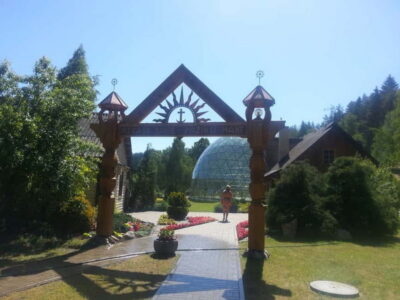
★ 4.8 · 86 reviews - Dzukija National Park and Grutas Park: Full-Day Tour
★ 4.4 · 18 reviews - Guided Tour of KGB Museum in Vilnius (Museum of Occupation and Freedom Fights)
★ 5.0 · 14 reviews
The Palace of Concerts and Sports: brutalism with basketball courts and propaganda-era scale
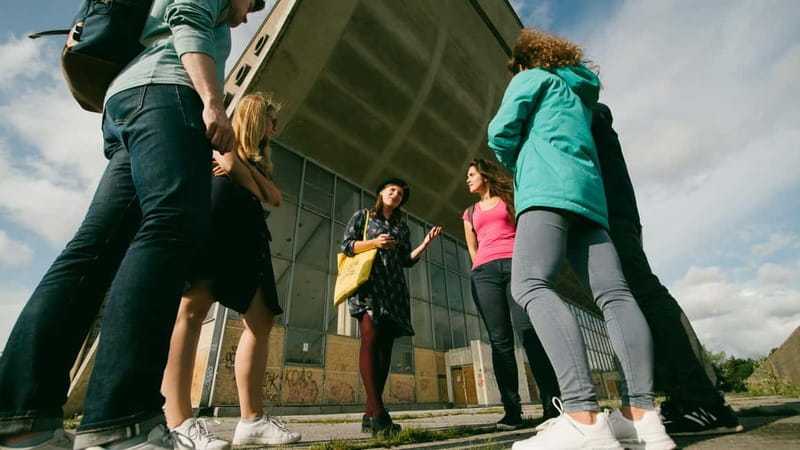
One of the first big visual moments is the former Palace of Concerts and Sports. This is the kind of Soviet brutalist building that can look cold at first glance, but the guide helps you see it as functional and social.
In Soviet times it wasn’t just a symbol. It hosted concerts and basketball games, meaning it was built for public gathering. That turns the building from a gray façade into a piece of everyday life, something people passed through and used.
The tour’s value here is perspective. You are not learning a checklist of dates. You are learning how the Soviet state shaped leisure, culture, and public identity through large-scale architecture.
Practical note: you will likely spend time looking up and around here. It helps to have your phone or camera ready, because the angles around big Soviet blocks can be surprisingly photogenic, especially if the light is right.
Walking along the river toward the Green Bridge after the statues came down
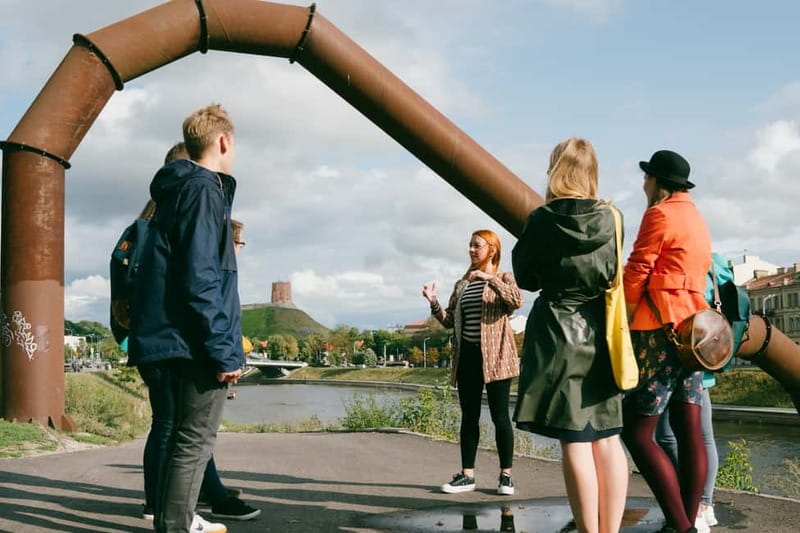
Next you follow the river corridor for views toward the Green Bridge. This segment gives your eyes a wide shot, and it gives the story context.
The Green Bridge used to be famous for Soviet propaganda statues. Those statues were taken down recently, and that detail is exactly why this tour feels current rather than frozen in the past. When political power changes, the city’s landmarks often change too, even if the bridge and the river remain the same.
What I like about this part is how it reframes architecture and monuments as political tools. You stop thinking of the city as fixed scenery and start treating it like a timeline you can walk through.
If you like photography, this is a good place to slow down. The river views naturally give you multiple angles without needing to search for viewpoints.
Lukiskiu Square and the KGB Museum area: when the city turns serious
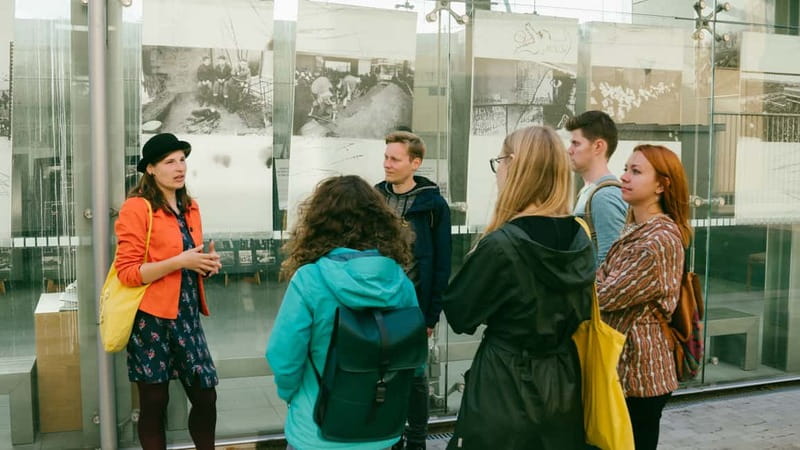
Then you reach Lukiskiu Square, near the KGB Museum. This is where the tour stops being about buildings and becomes about fear, control, and lived pressure under Soviet rule.
The tour description flags it as a place for difficult stories, and the overall tone here tends to be more somber. The guides use specific local references and explain how the Soviet system affected daily life, not just government-level decisions.
This is not the kind of stop where you just take a photo and move on. You are meant to understand what a square like this represented, why it sits where it does, and why people associate the area with repression.
If you are sensitive to darker historical topics, plan your emotional pacing. You might find yourself wanting to look away for a moment, then come back to focus when the guide explains the full meaning.
Former Lenin’s Square: renamed space and the politics of public memory
The tour also includes the location of former Lenin’s Square and explains how it changed after Lithuania’s declaration of independence.
This stop is easy to underestimate until you connect the dots. Soviet public spaces often carried ideological branding. When independence arrived, the city had to re-label the story it was telling in the street.
You get to see how public memory works in real geography. A renamed square isn’t just paperwork. It is a signal about who belongs, what values are respected, and what the next generation is supposed to learn.
I particularly like that the tour treats this as part of architecture and city planning, not just politics. The guide helps you see how the built environment supports the narrative, then how the narrative gets replaced.
More of Vilnius taken slowly on foot:

The final walk to Seimas: linking 1991 independence to a specific place
The tour ends next to the Seimas, Lithuania’s parliament building. The description notes that Seimas was one of the key spots where Lithuanians defended independence in 1991, and finishing here gives the story a strong ending.
After seeing brutalist state-scale buildings and hearing the darker details at Lukiskiu, you leave with a clearer sense of how independence was not abstract. It was defended in identifiable locations, with real people moving through the city under pressure.
This ending also helps you interpret what you saw earlier. The Soviet-era architecture you covered becomes more than a period style. It becomes an artifact of power, while Seimas represents power returned to Lithuanians.
When the tour ends, your brain usually keeps working for a bit. You start spotting lines of sight, square layouts, and building massing like you are reading the city as a system.
What to expect from the guide: personal stories, humor, and strong English
The tour runs with a live guide in English. Guides are central to how this experience lands, and the standout pattern from guide commentary is that they balance emotion with clarity.
You may hear personal and family memories connected to Soviet Vilnius from guides such as Tadas, Ieva, Leva, and Šarūnas (some guests also reported they should call him Šarūnas). That personal angle is not there to sensationalize. It is there to make the history feel real and human at the right moments.
Another theme is storytelling style. Several guides are praised for switching tone when needed, with humor at lighter points and a serious voice where it matters. That matters on a tour about occupation, because you need relief in the middle, not a constant heavy mood.
You should also expect clear answers and room for questions. The groups can be engaged, and a good guide usually uses questions to sharpen the story for everyone.
Walking level, pace, and comfort breaks: how hard is it really?
This is explicitly a walking tour that includes “lots of walking.” The tour duration is 2.5 hours, and the stops are spaced so the walk doesn’t feel like one long slog, but you still need to plan for time on your feet.
The info notes it is not recommended for people with limited mobility, even though it is described as wheelchair accessible. That sounds contradictory, and it is worth thinking about. If mobility is a concern, focus on the warning label. This tour is built around walking segments and viewing points.
You will also want to be ready for weather. Some guides are noted for handling rain with flexibility, which usually means they keep the route and timing sensible. Bring layers if you can, and if you are a photo person, pack something to protect your phone.
If you get tired halfway, take it slowly and ask the guide to repeat a detail. The tour is designed for explanations at stops, not only movement.
Price and value: why $24 for 2.5 hours can make sense
At $24 per person for a 2.5-hour guided walking tour, the value is mostly about expertise plus context.
You could walk around Vilnius on your own and see Soviet-era architecture. But you would miss why the buildings were built at that scale, what daily routines looked like, and why the city’s renamed spaces and removed statues matter.
This tour concentrates those connections into a short window, so you get a lot of meaning per hour. The best part is the mix: architecture, city planning, and personal experiences that explain the human side of the system.
If you are only in Vilnius for a short time, this is a strong pick because it gives you a framework for everything else you will see. Even if you later do other neighborhoods, you will interpret them differently after Lukiskiu Square and Seimas.
Pairing ideas: how to connect Soviet Vilnius with the rest of your day
Because this tour focuses on the Soviet period and the road to independence, you will get the most out of it if you plan your other activities around that theme.
If you want a smooth day, consider doing this after you get oriented to the Old Town. That way, Cathedral Square and the river corridor feel like a deliberate shift rather than random movement.
If you are interested in architecture, pair it with time to explore other public buildings afterward. The tour trains your eye to notice design choices, building massing, and how city planning affects movement.
And if you want to go deeper, use the guide’s cues. Some guides reference documentaries and related material to continue the thread after you leave. Even if you don’t plan to watch everything, it helps to know what topics are worth your attention.
Who should book, and who should skip
This tour is ideal if you want more than surface sightseeing. You will probably love it if you enjoy:
- City history tied to real places, not just timelines
- Architecture and city planning as part of politics
- Stories that mix personal memory with broader events
- A guided route that includes overlooked areas outside the classic Old Town loop
It may be a tough match if:
- You have limited mobility or you cannot handle long walking stretches
- You prefer light, purely visual sightseeing with minimal heavy topics
- You hate standing still for explanations at several viewpoints
One more fit question: do you like listening to a guide for 2.5 hours? If you do, this tour’s structure works well. If you prefer self-paced wandering, you might find it more satisfying to only visit a couple of the key sites on your own.
Should you book Vilnius Regular Walking Tour of Soviet Vilnius?
Yes, if you want Soviet Vilnius to make sense. For $24, you are paying for a guided narrative that connects brutalist landmarks, river viewpoints like the Green Bridge, difficult stops at Lukiskiu Square near the KGB Museum, and an independence ending at Seimas. That combination is hard to reproduce alone, especially in a short visit.
Book it if you have solid walking shoes and you are ready for serious history. Skip it or choose a different option if limited mobility will be a struggle, since the tour warns about lots of walking.
If your goal is to understand why Vilnius looks the way it does today, this tour gives you that map in story form.
The newest Vilnius listings
- Premium Lithuanian Craft Beer Degustation★ 5.0 · 1 review
- Vilnius History and Hidden Gems Self Guided Walking Tour★ 5.0 · 1 review
- Private day tour from Vilnius to goat Cheese farm and Kernave historical capital★ 5.0 · 1 review
- Hot Air Balloon Ride in Nemencine★ 5.0 · 1 review
- From Vilnius: Private Day Tour to Wolfs Liar (Hitler’s bunker)★ 5.0 · 1 review
- Explore Vilnius in 60 minutes with a Local★ 5.0 · 1 review
- From Vilnius: Private Tour to Curonian Spit national park★ 5.0 · 1 review
- Explore Vilnius’ Art and Culture with a Local★ 5.0 · 1 review
Soviet Vilnius Tours, compared.
Dzukija National Park and Grutas Park: Full-Day Tour
Read our review →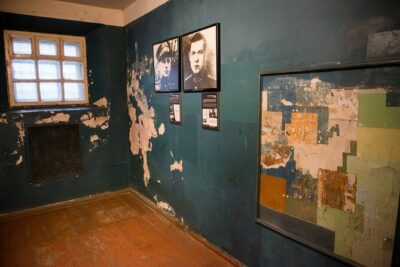
Guided Tour of KGB Museum in Vilnius (Museum of Occupation and Freedom Fights)
Read our review →
Private Half-Day Tour to Soviet Nudear Missle Base with Pickup
Read our review →
South Lithuania Day Trip: Dzukija County and Grutas Park from Vilnius
Read our review →Browse the lists this tour appears in