
Reviewed · JEWISH VILNIUS TOURS
Regular walking tour of Jewish Vilnius
Vilnius’ Jewish quarter tells a lot fast. This easy walking tour uses street-level history to show how the city’s Jewish life was shaped, and shattered, across centuries and WWII.
I love how the route keeps you moving through real places, not vague names. The biggest possible drawback is the Choral Synagogue stop can require extra cash and may be closed around Jewish holidays or special reasons.
In This Review
- What stood out most on this Jewish Vilnius walk
- Vilnius’ Jewish quarter, paced for a busy day
- Town Hall orientation at Rotuse before the streets
- Antokolskio and the move into older lanes
- Stiklių gatvė and Walls that Remember
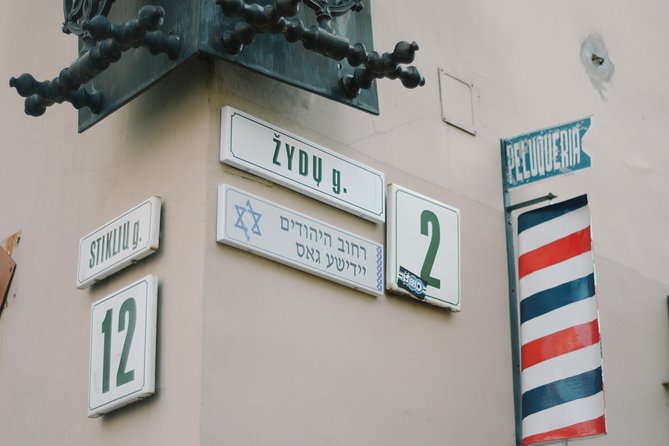
- Žydų gatvė and the scars near the Great Synagogue area
- Vilna Gaon Monument, then heading toward the ghettos
- The Choral Synagogue: the only active synagogue in the capital
- Ghetto map lessons, plus Žemaitijos street shop names
- Zemach Shabad monument and finishing with extra local help
- Price and value, and why the guide matters here
- Who this tour suits best
- Should you book this Jewish Vilnius walking tour?
- FAQ
- How long is the Regular walking tour of Jewish Vilnius?
- Where does the tour start, and what time does it begin?
- Is the tour offered in English?
- What is the price per person?
- Is the Choral Synagogue included, and is there any extra fee?
- Are the other stops free?
- How big are the groups?
- Can I get a refund if I cancel?
What stood out most on this Jewish Vilnius walk
- Town Hall start at Rotuse for a quick orientation before you hit the old lanes
- Narrow 16th-century streets around M. Antokolskio gatvė, where the community’s center shifted
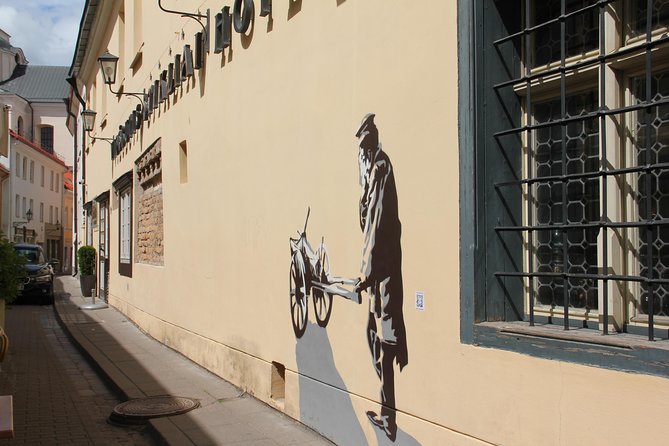
- Walls that remember art project, paired with a pass by Glassblowers’ street
- WWII and Soviet damage markers near Žydų gatvė, including what’s left of the Great Synagogue area
- The Vilna Gaon story at the monument, plus the guided context you might otherwise miss
- Choral Synagogue visit as the only active synagogue in Lithuania’s capital, with a possible extra fee
Vilnius’ Jewish quarter, paced for a busy day
This is a 2 hours 30 minutes walking tour that fits well into a tight Vilnius schedule. The meeting point is Vilnius Town Hall at Didžioji g. 31, and the start time is 11:00 am. You meet your guide on the stairs of the Town Hall, then you loop back to the same spot at the end.
The tour is offered in English, and tickets are mobile. Group size is capped at 30 people, which keeps things manageable and helps the guide keep the story moving.
The walk is not described as extreme, and the stops are short, usually around 10 to 15 minutes each. Still, it is a city walk on streets that can be uneven in old-town areas, so wear comfortable shoes and plan to stay mentally engaged, not just sightseeing.
More Jewish Vilnius, street by street:
- Vilnius: 2.5-Hour Jewish Quarter Walking Tour
★ 4.7 · 271 reviews - From Vilnius: Trakai Castle and Paneriai Memorial Tour
★ 4.6 · 107 reviews - From Vilnius: Kaunas, Trakai and Paneriai Forest
★ 4.7 · 76 reviews - Vilnius: Private Paneriai Park, Trakai Castle, Kernavė Tour
★ 4.8 · 36 reviews
Town Hall orientation at Rotuse before the streets
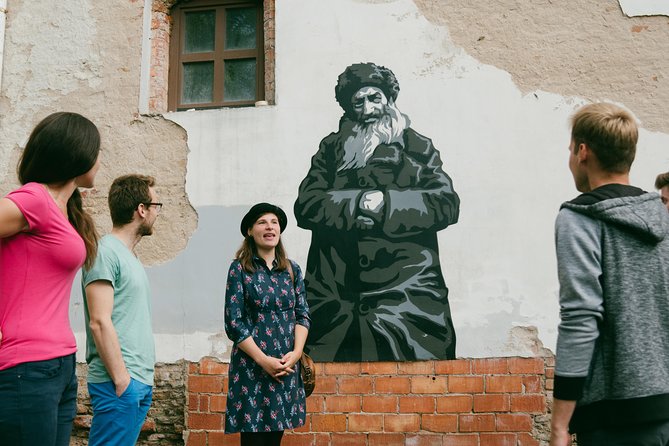
You begin at the Town Hall (Rotuse), right on the stairs. That first moment matters. It gives you a framework for the rest of the walk, so later you can connect what you see to what the guide is explaining.
This opening is all about Jewish history in Vilnius, setting up the shift from earlier Jewish presence in the city to the way later periods changed daily life. If you’re arriving in Vilnius for the first time, this kind of start is a big help. It turns the old quarter from a pretty maze into a map with meaning.
The good thing here is how quick it is. You get enough context to enjoy the details without spending half a day reading facts.
Antokolskio and the move into older lanes
Next comes M. Antokolskio gatvė. The focus here is the city’s older Jewish neighborhood growth, especially the idea that Jews began moving into these narrow, winding streets as early as the 16th century.
What I like about this stop is that it explains geography as a story. Instead of only listing famous names, the guide connects housing, streets, and community life. When you’re standing on the lane itself, it starts to feel logical how a community could form tightly in a compact area.
This is also a good moment to slow down and look at street width and turns. The streets are part of the history, not just background scenery.
Stiklių gatvė and Walls that Remember
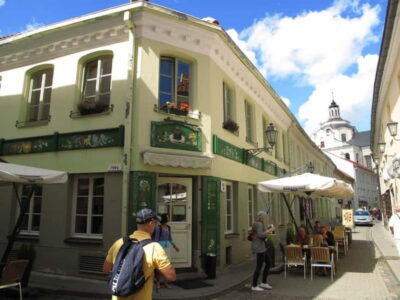
On Stiklių gatvė, you’ll see an art project tied to memory called Walls that remember. You also pass by Glassblowers’ street, which helps break the walk out of a purely tragic mode and reminds you that everyday crafts and city life mattered too.
This part works well if you like history that’s visible in modern Vilnius. The guide’s job here is to connect the art to the past locations and stories, so you’re not just taking a photo. You’re learning why those walls and streets were chosen.
A practical note: art sites are best when you can pause. If your group is moving quickly, ask the guide a question. These guides often have great follow-ups, especially if you ask what you should look for next.
Žydų gatvė and the scars near the Great Synagogue area
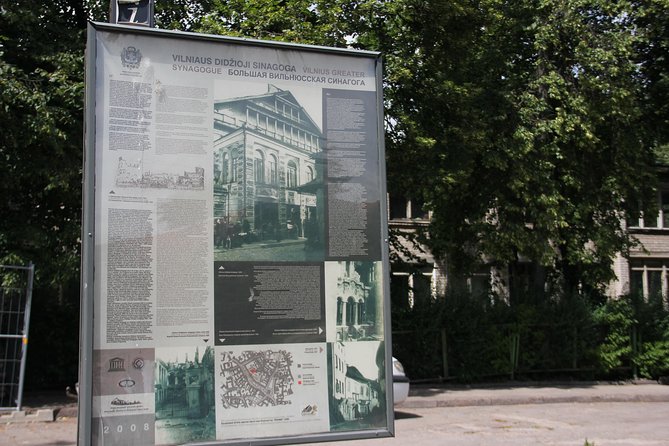
Žydų gatvė is where the story takes a darker turn. The guide points out damages done to the Great Synagogue of Vilna during WWII and the Soviet period.
Even if you know the Holocaust happened, seeing the aftermath in-place has a different weight. The guide helps you understand the difference between what still stands and what was erased. That contrast is one of the reasons this tour feels so purposeful.
This stop is emotional, but it’s not only heavy. It’s also educational. You learn how the built environment can preserve memories or show absences in a very blunt way.
More of Vilnius taken slowly on foot:


Vilna Gaon Monument, then heading toward the ghettos
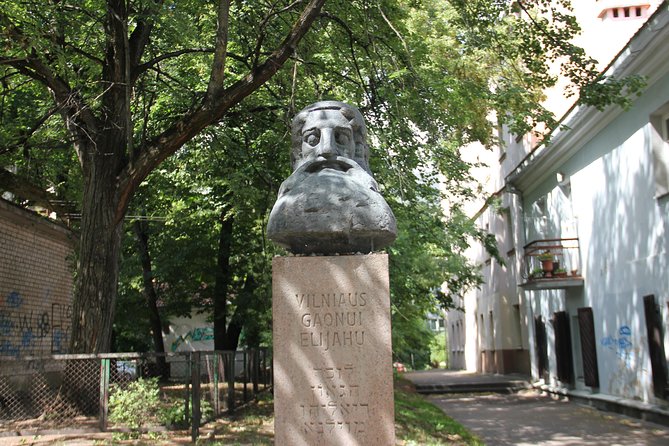
At the Vilna Gaon Monument, the guide tells the life story of Vilna Gaon, the famous Jewish scholar who lived in Vilnius in the 18th century. This is a smart break in the walk. It reminds you that before WWII, Vilnius was not just defined by later catastrophe. It had scholarship, debate, and intellectual life.
Then you continue on toward the ghetto areas. On Vokiečių gatvė, you leave behind the Small Ghetto and get to the former territory of the Big Jewish Ghetto. The tour even allows for a short break if needed, giving you a moment to catch your breath.
I like that the walk acknowledges pacing. It’s one thing to hear hard history, and another to process it while walking. A moment to regroup makes the next stops easier to take in.
The Choral Synagogue: the only active synagogue in the capital
The Choral Synagogue visit is a highlight. The tour is built to get you there for an indoor look at Lithuania’s capital’s only active synagogue.
You’ll have about 20 minutes here, as long as it’s open. The key practical detail is the money and timing: the synagogue may require an additional 2 EUR fee in cash only, and it can be closed during Jewish holidays or for other reasons.
So go in prepared for two possibilities:
- You get entry and you see the interior, which is often the most moving part.
- Or you visit only when the building is open, and if it isn’t, you still benefit from the surrounding context the guide provides.
Either way, this stop gives you something more than outdoor landmarks. It anchors the tour in something that continues today, not only ruins and markers.
Ghetto map lessons, plus Žemaitijos street shop names
After the synagogue area, you shift to a more direct explanation of the WWII ghetto system. There’s a stop featuring a Map of the Ghetto, where your guide explains the creation of two ghettos in the former Jewish quarter, plus life in the ghettos and their liquidation.
This is where the guide’s storytelling really matters. A map can be confusing on your own, because you’re staring at lines without understanding how people experienced those borders day to day. On this tour, you get the structure first, so later details make sense.
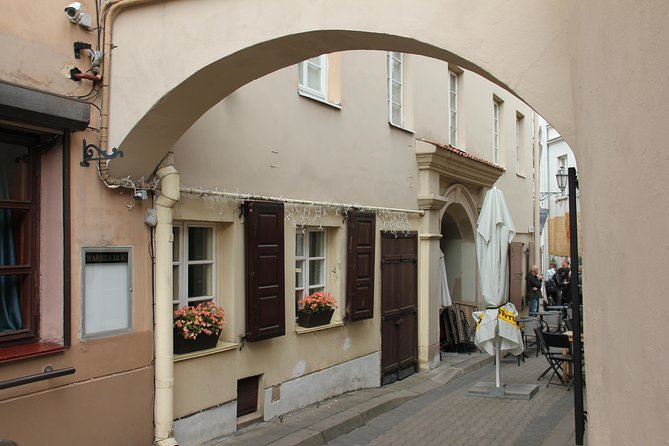
Then you walk along Žemaitijos gatvė. Here you can see preserved names of Jewish shops written in Yiddish and Polish from the interwar period. Toward the end of the street there’s a building that served as a library during ghetto years.
I love this pairing of language and place. Shop names in multiple languages remind you what everyday commerce looked like. A library building reminds you that education and reading continued even under extreme pressure.
These are small physical clues, and without a guide, they can be easy to overlook. With the guide, they turn into evidence you can stand beside.
Zemach Shabad monument and finishing with extra local help
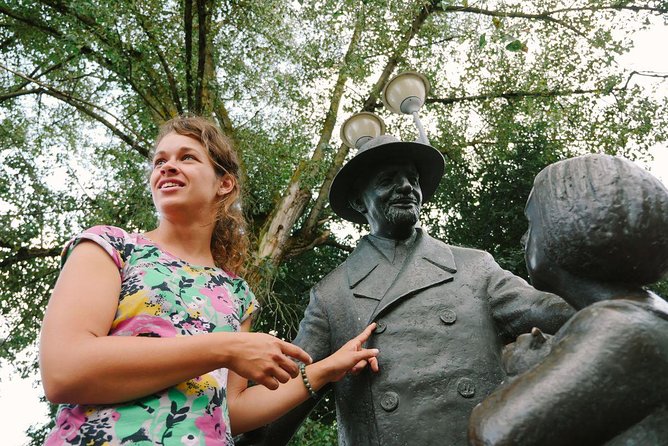
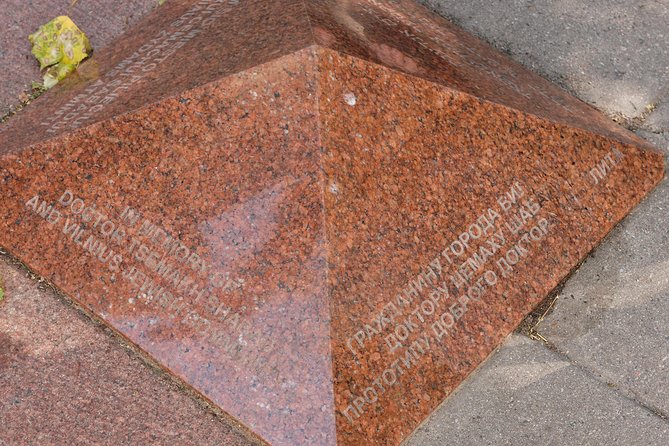
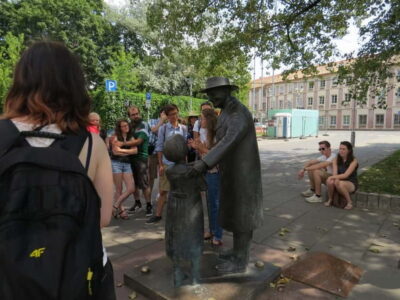
The last major historic stop is the Monument to Zemach Shabad, a doctor who lived in Vilnius. This moment adds a human-scale figure to the story, showing how medical life, service, and community leadership were part of the historical fabric too.
From there, your guide points you to the Jewish information office if you want extra context. This is one of those practical upgrades that can help you after the walk. If you’re the type who wants a deeper reading list or you want to understand what you saw even better, you’ll know where to go next.
The tour ends back at Vilnius Town Hall, so it’s easy to plug this into lunch plans or your next Old Town stop without a complicated transit plan.
Price and value, and why the guide matters here
At $26.62 per person for about 2.5 hours, this tour is priced like an “intro that goes somewhere.” In other words, you’re not paying for a long museum day. You’re paying for an organized walking route plus an English guide to translate street-level remnants into a coherent story.
You also get multiple “free entry” moments throughout the walk, with the synagogue stop being the notable exception where additional cash may be needed. That structure is useful for budgeting: you can plan around one paid indoor visit rather than unexpected charges at every stop.
Where the value really shows is in the guide-led Q and A style. The experience is repeatedly described as thorough, interactive, and able to answer questions. The guides you’ll encounter, including people like Kristina, Milda, and Michael, are known for clarity and for making the material feel personal without getting lost in details.
If you want the best value, come with one or two questions in mind. For example:
- What did the ghettos change in daily life?
- What did the community rebuild, and what remains?
- Which sites should I research after the walk?
Then you’ll get more from each stop, not just the headline facts.
Who this tour suits best
This walk is a strong fit if you want:
- a tight, organized introduction to Jewish Vilnius
- WWII context explained where it happened
- a route that connects monuments, streets, and memorial markers
It also works well even if you’re not Jewish. The subject is sensitive, but the tour is presented in a way that stays educational and respectful, with room to ask questions.
If you already know the basics of the Holocaust but you want Vilnius-specific grounding, this tour helps you place facts onto actual addresses, streets, and buildings.
Should you book this Jewish Vilnius walking tour?
Yes, if you want a meaningful first pass through Vilnius’ former Jewish quarter. The route hits the kind of places that are hard to interpret on your own, especially when you’re trying to understand what was once there and what the city shows today.
Book it if:
- you like guided context that makes streets understandable
- you want a visit to the Choral Synagogue when it’s open
- you prefer an outdoor walk with short indoor time, rather than a long museum day
Hold off or stay flexible if:
- your timing might clash with Jewish holidays, since the synagogue can be closed
- you know you need more time at memorial sites, because the stops are intentionally short for a 2.5 hour format
If you do book, bring cash for the synagogue fee possibility, wear good walking shoes, and plan to take a few moments to just look around. The streets are doing half the teaching here.
FAQ
How long is the Regular walking tour of Jewish Vilnius?
It lasts about 2 hours 30 minutes.
Where does the tour start, and what time does it begin?
It starts at Vilnius Town Hall (Didžioji g. 31, 01128 Vilnius) at 11:00 am. The guide meets you on the stairs.
Is the tour offered in English?
Yes. The tour is offered in English.
What is the price per person?
The price is $26.62 per person.
Is the Choral Synagogue included, and is there any extra fee?
The Choral Synagogue stop is part of the tour, but entry can require an additional 2 EUR fee paid in cash only. It’s also subject to opening hours, and it may be closed during Jewish holidays or other reasons.
Are the other stops free?
The stops listed before and after the synagogue are marked as free.
How big are the groups?
The tour has a maximum of 30 travelers.
Can I get a refund if I cancel?
Yes, you can cancel up to 24 hours in advance for a full refund.
The newest Vilnius listings
- Premium Lithuanian Craft Beer Degustation★ 5.0 · 1 review
- Vilnius History and Hidden Gems Self Guided Walking Tour★ 5.0 · 1 review
- Private day tour from Vilnius to goat Cheese farm and Kernave historical capital★ 5.0 · 1 review
- Hot Air Balloon Ride in Nemencine★ 5.0 · 1 review
- From Vilnius: Private Day Tour to Wolfs Liar (Hitler’s bunker)★ 5.0 · 1 review
- Explore Vilnius in 60 minutes with a Local★ 5.0 · 1 review
- From Vilnius: Private Tour to Curonian Spit national park★ 5.0 · 1 review
- Explore Vilnius’ Art and Culture with a Local★ 5.0 · 1 review
Jewish Vilnius Tours, compared.
Private Paneriai Park, Trakai Castle, Kernavė Tour
Read our review →
Tour out of Vilnius: Paneriai holocaust park, Trakai, Kaunas
Read our review →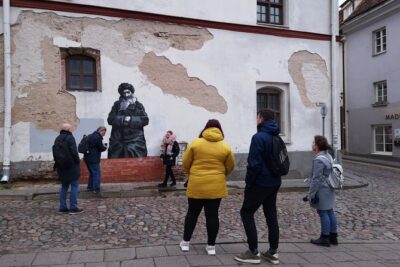
Day tour out of Vilnius: Paneriai holocaust park,Trakai castle, medieval Kernave
Read our review →Browse the lists this tour appears in