
Reviewed · SOVIET VILNIUS TOURS
Guided Tour of KGB Museum in Vilnius (Museum of Occupation and Freedom Fights)
Walk in, and the building remembers. This private English tour of Vilnius KGB Museum in the former KGB headquarters focuses on what the Soviet regime did there, and how Lithuania fought to reclaim independence.
I love the guided walk through the former prison and the places tied to death sentences, because you get meaning from the objects and rooms, not just dates. I also love how the guide connects the museum’s modern exhibits to real repression and resistance, including the room dedicated to the Jewish Holocaust. One drawback: the content is heavy, and the museum admission ticket (6 EUR) is not included in the tour price.
In This Review
- Key highlights at a glance
- Entering the former KGB building in Vilnius
- Meeting at Aukų g. 2A, then settling into a 1-hour walkthrough
- Inside the prison: what you’ll see and why the guide matters
- Death sentences and the machinery of repression
- The Jewish Holocaust chamber: understanding the building’s layered past
- Modern exhibits on loss of independence and the fight for freedom
- Pope Francis and the museum as a place of remembrance
- Price and value: what $168.41 buys for up to 15 people
- Timing, tickets, and practical planning
- Who should book this guided KGB Museum tour
- Should you book this KGB Museum guided tour in Vilnius?
- FAQ
- Where is the meeting point for the guided tour?
- How long is the guided tour?
- What language is the tour offered in?
- Is this tour private?
- What is the maximum group size?
- Is the museum admission ticket included in the tour price?
- Do you get hotel pickup and drop-off?
- Can children participate?
- What are the cancellation terms?
Key highlights at a glance
- A former KGB building tour that lets you see spaces tied to interrogation, imprisonment, and execution
- Death sentence areas explained by a professional guide, so the story makes sense
- A dedicated chamber on the Jewish Holocaust, covering the building’s German occupation use from 1941 to 1944
- Private English guidance for your group (up to 15 people) for focused pacing
- Soviet occupation and repression context, plus the persistent fight for independence
- 1-hour visit that fits neatly into a packed Vilnius itinerary
Entering the former KGB building in Vilnius
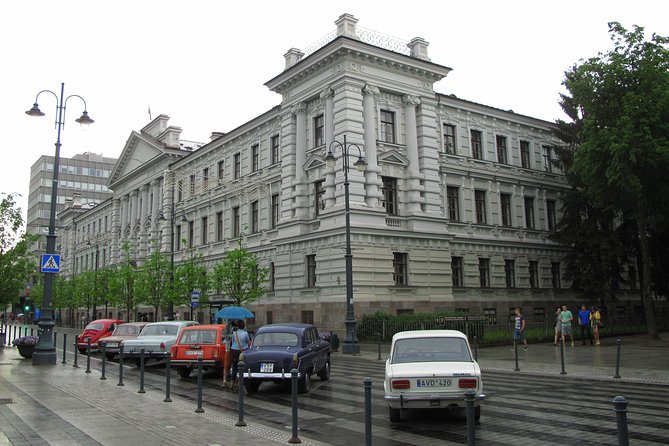
The KGB Museum in Vilnius is housed in the very building where Soviet authorities carried out their work for decades. From the start, the place has a stubborn way of sticking in your mind. Even if you already know the broad story, walking through it with an English guide gives you something different, the what and the why, not just the headline.
This is not a quick “look and leave” museum either. In about an hour, you’ll move through core parts of the experience that explain how terror functioned, how prisoners were processed, and how independence survived despite repression. You’ll also get context for Lithuania’s mid-20th-century loss of independence, when control tightened and dissent had consequences.
The atmosphere can be emotionally demanding. If you are sensitive to stories of torture, killing, and persecution, plan to take it at your own pace and give yourself room afterward.
More of the Soviet decades still standing:
- Regular walking tour of Soviet Vilnius
★ 5.0 · 259 reviews - Vilnius: Regular Walking Tour of Soviet Vilnius
★ 4.9 · 252 reviews - Vilnius: The Way of Freedom: Behind the Walls of the KGB
★ 4.8 · 86 reviews - Dzukija National Park and Grutas Park: Full-Day Tour
★ 4.4 · 18 reviews
Meeting at Aukų g. 2A, then settling into a 1-hour walkthrough
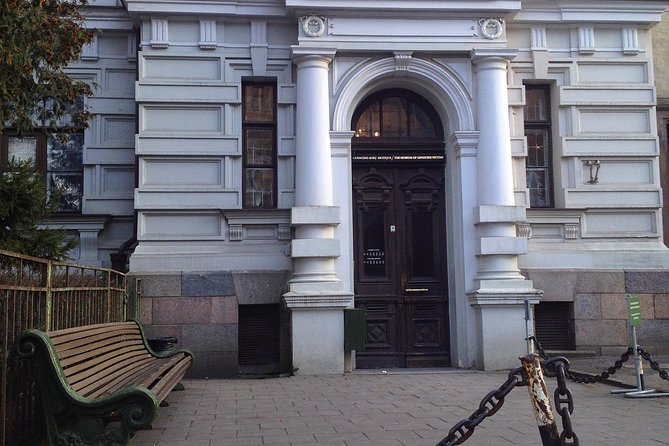
Your tour meets at Aukų g. 2A, 01400 Vilnius. It’s easy to fit this into a day because there is no hotel pickup and you return to the same meeting point at the end. The tour time is flexible within the museum’s operating hours, and you can pick a start time that matches your schedule.
Expect a private set-up for your party, up to 15 people. That size matters. It means you are not fighting for attention in a crowd, and the guide can slow down when you want clarity. It also helps if your group includes mixed interests, because the guide can anchor the tour in the parts you care about most.
The guided portion is about 1 hour (approx.), which is short enough to keep your energy intact, but long enough for real explanation. You’re not just seeing rooms, you’re getting the connective tissue between them.
Inside the prison: what you’ll see and why the guide matters
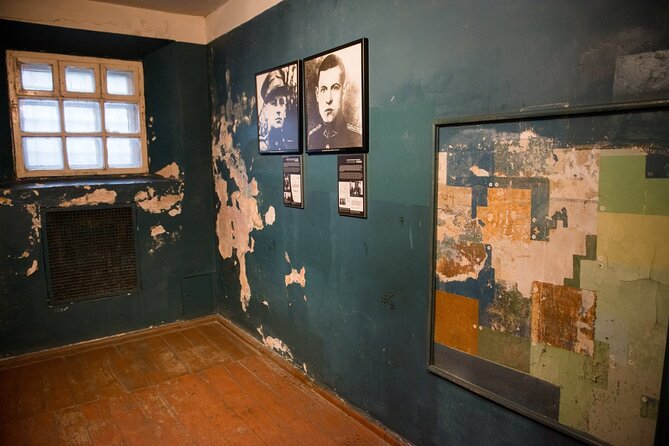
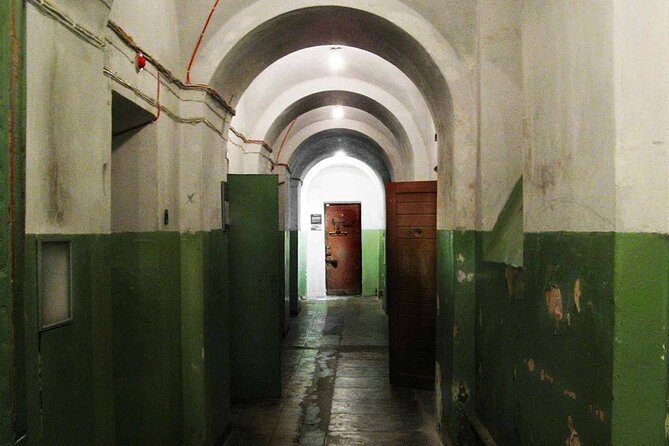
One of the biggest reasons to book a guided tour here is what you get while walking through the former prison. You’ll go through the prison areas where political prisoners were kept and tortured. This is the museum part where you can quickly end up with a pile of grim images if you don’t have context.
With a professional guide, you’re shown where and how people were killed. That matters because the museum is not only about suffering as a concept. It’s about a system, the steps, the spaces, and the way power worked behind closed doors.
The guide also helps you understand how the museum is structured. Some exhibits are meant to be read slowly. Others are designed as visual evidence. Either way, you’ll get help turning what you see into a clearer story, including the overall Soviet influence and occupation of Lithuania.
A practical note: wear comfortable shoes. Even in a short tour, you’re walking through the building, and it can be easier to focus when your feet are not arguing.
Death sentences and the machinery of repression
Alongside the prison walk, you’ll spend time on the premises where death sentences were implemented. This is one of those museum sections where a guide changes everything. Without guidance, it’s possible to view the rooms as separate fragments. With guidance, it clicks into a timeline and a system.
You’ll also learn about repressions by Soviet authorities and the long-term consequences for those who resisted. The aim here is not to shock you for the sake of shock. It’s to show how repression was organized and how it impacted ordinary lives and political life.
This is where the tour’s English delivery matters. You get explanations in clear language, so you can follow the cause and effect. If you’re the type who hates vague museum labels, you’ll likely appreciate the directness.
The Jewish Holocaust chamber: understanding the building’s layered past
Another powerful part of this experience is one chamber, number 19, dedicated to the Jewish Holocaust. The reason this room exists in this building is that from 1941 to 1944, the KGB building was used by German forces as the Gestapo and SD headquarters and as a prison.
You’ll hear about the Sonderkommando of the city of Vilnius, and how it operated from the building, including barracks used in connection with killings of Jews and others. It’s a grim history, but it’s also an important one, because it shows how the same physical space served different persecutors across different occupations.
A guided visit helps you keep the overlap straight. You’re not just told that it happened. You’re shown how the building functioned across regimes, and why the museum frames this chapter alongside Soviet occupation and Lithuanian independence struggles.
If you want to understand why a memorial museum can feel so emotionally specific, this is the section that explains it.
More museums worth the entry in Vilnius:
Modern exhibits on loss of independence and the fight for freedom
After the prison and key spaces, you’ll move into modern exhibitions that cover Lithuania’s mid-20th-century loss of independence. You’ll also see displays about repressions by Soviet authorities and the persistence of the fight for independence.
This is the part I find most helpful for filling in gaps. Prison rooms can make you feel stuck in one terrible moment. The modern exhibits help you step back and understand the broader arc, how repression shaped politics over time, and how independence survived long enough to be regained.
You’ll also learn about self-sacrificing, persistent fight for independence. That theme is important because it prevents the museum from being only about victims and perpetrators in isolation. It makes the story wider, and it gives you a fuller sense of what Lithuanian freedom meant in practice, not just in slogans.
The museum’s strength is that it doesn’t rely on one approach. It pairs physical spaces tied to what happened with exhibitions that explain the wider political and human context.
Pope Francis and the museum as a place of remembrance
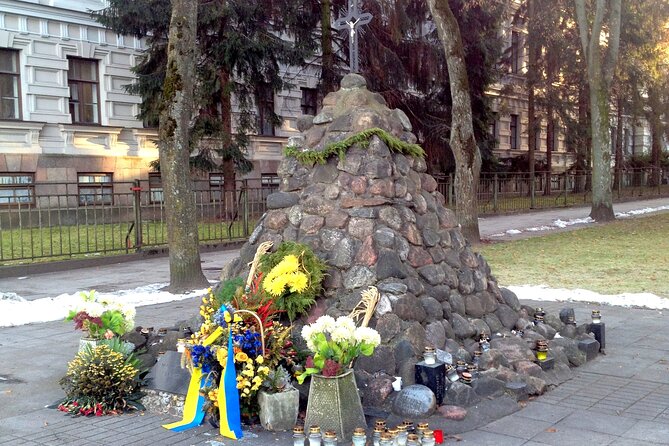
One of the more unexpected facts you’ll hear during the visit is that in September 2018, Pope Francis ended his visit in Lithuania at the KGB Museum and prayed for the victims of the Soviet regime in Lithuania.
That detail doesn’t change the facts inside the rooms, but it does change how you might feel about the museum’s role. It’s not only for explaining history to tourists. It’s also a place used for public remembrance, and that makes the experience feel official, serious, and connected to a wider world.
Price and value: what $168.41 buys for up to 15 people
The tour price is $168.41 per group, up to 15 people, and it lasts about 1 hour (approx.). If you’re traveling as two or four people, this is still a private tour price, so it will likely feel higher than a standard group ticket. But if you have a small group of friends or family, private time with an English guide can quickly become worth it.
The math can work in your favor when you fill seats. If your group used the full cap of 15 people, the cost per person drops dramatically. Even if you do not reach the maximum, you are buying attention and pacing, not just a ticket.
Also, remember the museum admission ticket is 6 EUR and not included in the tour price. That means your all-in cost will be a little higher once you add museum entry. I prefer to think of it this way: you are paying for the guide’s interpretation and the private pace, and you pay the museum separately for access.
Where this tour shines is in avoiding the common museum problem of standing in front of dark material and feeling lost. You pay for meaning.
Timing, tickets, and practical planning
The tour runs within the museum’s listed opening hours: Wednesday through Saturday, 10:00 AM to 6:00 PM. Tours are available over a stated range of dates, so it’s worth confirming your specific day and time when you book.
You’ll receive a mobile ticket, and the tour begins and ends at the same meeting point (Aukų g. 2A). That keeps your day simple. There is also no hotel pickup, so you’ll want to build in time to reach the meeting point without stress.
Here’s a practical tip that will help you enjoy the tour more. Plan something calmer right after your visit, something quiet where you can process what you saw. This museum is not just educational. It is emotionally intense.
If you are traveling with kids, the important rule is that children must be accompanied by an adult. Beyond that, you’ll need to judge whether the material fits your family.
Who should book this guided KGB Museum tour
This tour is a great match if you want more than a self-guided walk. If you like historical explanation tied to real rooms, you’ll appreciate having a professional guide who can connect the exhibits to Lithuania’s occupation and independence story.
It also suits English-speaking visitors who want clarity without guessing. The museum topics are complex, and having guidance helps you keep the threads straight, from Soviet repression to the building’s earlier German occupation use.
I’d skip it only if you strongly prefer quiet time in museums, or if you cannot handle topics involving prisons and killing. If you’re emotionally okay with dark history and you want your time to mean something, this is the kind of tour that makes you leave with a clearer picture.
Should you book this KGB Museum guided tour in Vilnius?
If you want the KGB Museum to click, I’d book it. A private English guide is what turns rooms into understanding, especially in the prison spaces and the sections tied to death sentences and Holocaust memory. With a 5 out of 5 rating and 14 reviews, it has a strong track record for visitors who care about interpretation, not just sightseeing.
Just plan for the emotional weight, and factor in the separate 6 EUR museum ticket when you budget. If you do those two things, you’ll get a focused, meaningful hour in one of Vilnius’s most important and difficult places to visit.
FAQ
Where is the meeting point for the guided tour?
The tour meets at Aukų g. 2A, 01400 Vilnius, Lithuania.
How long is the guided tour?
The tour lasts about 1 hour.
What language is the tour offered in?
The tour is offered in English.
Is this tour private?
Yes. It is private, and only your group participates.
What is the maximum group size?
Up to 15 people per booking.
Is the museum admission ticket included in the tour price?
No. The admission ticket (6 EUR) is not included in the tour price.
Do you get hotel pickup and drop-off?
No. Hotel pickup and drop-off are not included.
Can children participate?
Children must be accompanied by an adult.
What are the cancellation terms?
You can cancel for free up to 24 hours in advance for a full refund. If you cancel less than 24 hours before the experience starts, you will not receive a refund.
The newest Vilnius listings
- Premium Lithuanian Craft Beer Degustation★ 5.0 · 1 review
- Vilnius History and Hidden Gems Self Guided Walking Tour★ 5.0 · 1 review
- Private day tour from Vilnius to goat Cheese farm and Kernave historical capital★ 5.0 · 1 review
- Hot Air Balloon Ride in Nemencine★ 5.0 · 1 review
- From Vilnius: Private Day Tour to Wolfs Liar (Hitler’s bunker)★ 5.0 · 1 review
- Explore Vilnius in 60 minutes with a Local★ 5.0 · 1 review
- From Vilnius: Private Tour to Curonian Spit national park★ 5.0 · 1 review
- Explore Vilnius’ Art and Culture with a Local★ 5.0 · 1 review
Soviet Vilnius Tours, compared.
Dzukija National Park and Grutas Park: Full-Day Tour
Read our review →

Private Half-Day Tour to Soviet Nudear Missle Base with Pickup
Read our review →
South Lithuania Day Trip: Dzukija County and Grutas Park from Vilnius
Read our review →Browse the lists this tour appears in