
Reviewed · MUSEUMS
Admission Ticket at Auto Museum Vilnius
Cars, but make it history. Auto Museum Vilnius is an easy, low-stress stop that turns a quick outing into a real timeline of how cars changed over about 150 years. I like that it is self-paced, so you can slow down for the details or skim if you are short on time.
What I especially liked is the chronological setup and the car-by-car explanations that help you understand what you are looking at. You can also expect some hands-on moments that work well for families. One thing to consider: it is popular enough that you should pick a time slot you can actually commit to, since you are booking a reserved entry window.
In This Review
- Key points before you go
- Auto Museum Vilnius: A smart, low-effort stop near Old Town
- Your 2-hour visit: self-paced, timeline ordered, and easy to plan
- What you actually see: famous cars, restored details, and the 150-year arc
- Stop inside: following the evolution of design without getting bored
- Family time works here: interactive moments, calm rooms, and storage for jackets
- Reading the car descriptions: how to make the museum feel personal
- English experience: what to expect from the language setup
- Price and value: is $24.20 for Auto Museum Vilnius worth it?
- Opening hours and choosing the right day (avoid Tuesdays)
- Getting there: near public transportation and easy to fit in
- Should you book Auto Museum Vilnius?
- FAQ
- How long is the Auto Museum Vilnius admission?
- How much does admission cost?
- What days can I visit?
- Is the ticket available on a mobile device?
- Is the experience offered in English?
- Is there free cancellation?
Key points before you go
- Timeline layout: cars are organized so you can follow the evolution of transport without feeling lost
- Big-name stories: you will see vehicles tied to famous owners and surprising world connections
- Do it at your pace: plan for about 2 hours and keep moving when you want
- Family-friendly extras: there are interactive elements and practical lockboxes for jackets and bags
- English support: the experience is offered in English, with descriptions to read as you go
- Close to Old Town: you are only about 5 minutes from Vilnius old town
Auto Museum Vilnius: A smart, low-effort stop near Old Town
Vilnius is great for walking, but some days you still want a break that is not just coffee and benches. Auto Museum Vilnius works because it feels like an actual outing, not a chore. The museum is about 5 minutes from Vilnius old town, so you can pair it with an evening stroll without rearranging your whole itinerary.
The booking approach is also practical. You pick your day (you can choose any day of the week except Tuesdays), reserve your time slot, and you get a mobile ticket. That matters if you like to keep things simple on the road. You do not need to hunt for printouts or worry about paper.
Even if you are not a die-hard car person, the museum is designed to help you get oriented fast. Expect a layout that guides you through the development of cars, not just a random room full of metal.
More museums worth the entry in Vilnius:
- Museum of illusions Entrance Ticket
★ 4.5 · 201 reviews - Guided Tour of KGB Museum in Vilnius (Museum of Occupation and Freedom Fights)
★ 5.0 · 14 reviews - Day tour out of Vilnius: Paneriai holocaust park,Trakai castle, Rumsiskes museum
★ 5.0 · 4 reviews - Skip the Line: Europos Parkas, Open-Air Museum Ticket Vilnius, Lithuania
★ 4.0 · 4 reviews
Your 2-hour visit: self-paced, timeline ordered, and easy to plan
This is an experience designed for “show up and wander,” not for long, rigid tours. The visit runs about 2 hours (approx.), and multiple reviews point out that the museum is calm, with enough room to move without shoulder-checking strangers every few minutes.
The big reason this works is the timeline order. If you like learning, it gives you a clear story. If you are more of a scan-and-go type, it still helps, because you can follow the progression and skip ahead when you hit a car era you like.
Here is how I suggest pacing it:
- Start at the beginning of the timeline and read the main info points first.
- Do not try to photograph everything. Pick highlights and give yourself time to stand still.
- If you see something that sparks curiosity, slow down and read the description right with it.
You will probably finish with enough energy to head back into old town, not with that museum fatigue that makes dinner harder.
What you actually see: famous cars, restored details, and the 150-year arc
Auto Museum Vilnius is built around the story of transportation evolution. The museum highlights over 100 exhibits that are either restored or kept in their original, authentic state. That “restored or authentic” part matters, because it affects how a car looks and feels. In practice, it means you are not just looking at replicas. You are seeing preserved pieces of design and engineering from different eras.
The museum also frames cars in terms of who owned them and how they fit into history. The result is less like a showroom and more like a walking set of snapshots across time.
Some specific examples from the collections and descriptions help make it real:
- You can sit with a Delage and get a sense of a story tied to the King of Nepal.
- There is a Lancia Astura connected to Mussolini’s circle from the Foreign Affairs Ministry, which adds a political-historical twist you probably would not expect from a car museum.
- At Hispano Suiza, you may spot links to famous names including Coco Chanel, Paul McCartney, and Albert Einstein.
Even if you do not know the technical specs, these owner connections make the cars feel human. They give you a reason to care beyond the design lines.
And because the museum covers the whole arc of modern transport evolution, you can compare eras side by side. That is where the timeline order pays off.
Stop inside: following the evolution of design without getting bored
At Auto Museum Vilnius, “evolution” is not a vague word. You can physically see shifts in the way cars are built and presented, from early forms to later, more recognizable styling. Multiple visitors note that everything is laid out logically, which is exactly what you want when you are trying to enjoy a museum without turning it into homework.
One of the most helpful bits is that the cars come with descriptions. That sounds obvious, but it changes the experience. Instead of wandering and guessing, you can read what you are looking at. It also helps if you are visiting with mixed interests, like one person who loves classic marques and another who just wants something interesting to do.
If you are short on time, here is the smart move: focus on the transition points. Those are the moments where design meaningfully changes, because they make the timeline feel like a story rather than a list.
Family time works here: interactive moments, calm rooms, and storage for jackets
If you are visiting with kids, this museum has a friendly rhythm. One review flat-out calls it a place for kids, and the key reason is practical: there are areas with cars that children can interact with or try. That turns it from “look only” into “look and do,” which usually makes the difference between a 10-minute visit and a real hour-long outing.
You also get practical amenities. Visitors mention lockboxes for jackets and bags, which solves a common museum problem. You do not want to drag bulky things around while trying to look at details, and lockers let you keep moving.
The atmosphere seems to help too. Several reviews describe it as calm and not overly crowded, which makes it easier for families to pace themselves. If you like museums that do not feel like a race, you should feel at home here.
More going on across Vilnius:



Reading the car descriptions: how to make the museum feel personal
A museum is only as good as its “how do I understand this?” layer, and Auto Museum Vilnius seems to do that well. Visitors specifically highlight that the descriptions with each vehicle are helpful, and I agree with that approach.
When you read the car’s info right as you look at it, three things happen:
- You spot design features you would otherwise miss.
- The car stops being a random object and becomes a piece of a larger story.
- Even if you only read a few lines, the visit feels more meaningful.
If you want a simple strategy, pick one car per era as your “anchor.” Read the description, then look at the surrounding cars. Your brain starts building patterns automatically.
Also, do not ignore the smaller details. Visitors mention a souvenir shop with cool items, which is a good sign that the museum is not just about objects. It is trying to turn your visit into something you can remember and take home.
English experience: what to expect from the language setup
This experience is offered in English, and that is a big help if your travel plans include a language gap. You can move through the museum comfortably, and you have descriptions to support what you see.
That said, this is not presented as a full scripted theater show in the data provided. It is more like a museum entry with an English-friendly presentation. The best way to use that is to read the descriptions as you go and ask staff questions if something feels unclear.
If you are the type who likes to get value quickly, the museum does that for you. The timeline layout plus English explanations means you do not need a master-level car vocabulary to enjoy it.
Price and value: is $24.20 for Auto Museum Vilnius worth it?
At $24.20 per person for about 2 hours, the value depends on your style of travel. If you are the “one ticket, one strong experience” type, this price feels reasonable because you get a lot of time in a structured collection, with over 100 exhibits. You are not paying for a quick photo stop.
The self-paced format also boosts value. You can spend 45 minutes if you must, but you can also take a more relaxed two hours and still feel like you saw enough. That flexibility matters.
A couple of reviews also point to the idea that the fee is small for what you get, and one highlights that they visited for about 1.5 hours and felt it was time well spent. In other words, you do not need a full half-day commitment to make it worthwhile.
The bottom line for value: if cars and design history interest you even a little, this is a strong spend for a short visit.
Opening hours and choosing the right day (avoid Tuesdays)
You can book for any day of the week except Tuesdays. That is useful when you are planning around Vilnius walking days or when you want to build a loose route through the city.
One set of opening hours is listed for Monday (10:00 AM to 7:00 PM). The data does not provide the full weekly schedule here, so treat the Monday hours as the clearest confirmed reference. When you pick your slot, double-check the specific time window shown for your booking date.
Also, aim for a time that matches your energy. This museum is best when you can slow down. If you pick a slot right before dinner, you might feel rushed. If you choose an earlier time, you will probably enjoy the reading and the pacing more.
Getting there: near public transportation and easy to fit in
The museum is noted as being near public transportation, which is what you want in a city you might be walking a lot in already. Even if you are staying near old town, being able to move by transit for part of the day is a plus.
The biggest practical tip is simple: treat it like a “middle block” between other activities. You can do old town in the morning, hit the museum midday, and then return for a relaxed evening walk. Because it is about two hours, it does not wreck your schedule.
Should you book Auto Museum Vilnius?
Book it if:
- You want a structured museum that helps you understand what you are seeing through timeline organization and car-by-car descriptions.
- You are traveling with kids and want something that includes hands-on moments and practical storage like lockboxes.
- You like short, focused cultural stops that do not require hours of commitment.
Skip or rethink it if:
- You only want the very biggest world-famous monuments. This is a specialist museum. You will enjoy it most if cars, design history, or the human stories behind vehicles feel like your kind of travel.
If you do book, my advice is to give yourself the full two hours. That is the sweet spot where you can actually follow the evolution without turning it into a checklist.
FAQ
How long is the Auto Museum Vilnius admission?
The visit is listed as about 2 hours (approx.).
How much does admission cost?
Admission is priced at $24.20 per person.
What days can I visit?
You can choose any day of the week except Tuesdays.
Is the ticket available on a mobile device?
Yes. It is a mobile ticket.
Is the experience offered in English?
Yes. The experience is offered in English.
Is there free cancellation?
Yes. Free cancellation is available up to 24 hours in advance for a full refund.
The newest Vilnius listings
- Premium Lithuanian Craft Beer Degustation★ 5.0 · 1 review
- Vilnius History and Hidden Gems Self Guided Walking Tour★ 5.0 · 1 review
- Private day tour from Vilnius to goat Cheese farm and Kernave historical capital★ 5.0 · 1 review
- Hot Air Balloon Ride in Nemencine★ 5.0 · 1 review
- From Vilnius: Private Day Tour to Wolfs Liar (Hitler’s bunker)★ 5.0 · 1 review
- Explore Vilnius in 60 minutes with a Local★ 5.0 · 1 review
- From Vilnius: Private Tour to Curonian Spit national park★ 5.0 · 1 review
- Explore Vilnius’ Art and Culture with a Local★ 5.0 · 1 review
Museums, compared.
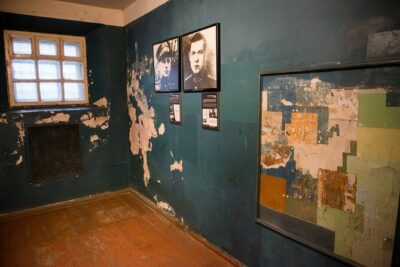
Guided Tour of KGB Museum in Vilnius (Museum of Occupation and Freedom Fights)
Read our review →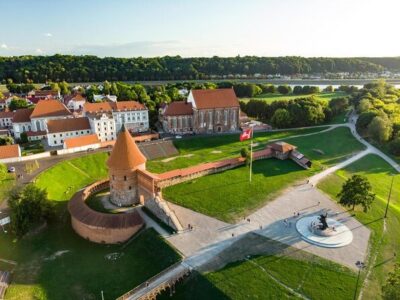


Day tour out of Vilnius: Paneriai holocaust park,Trakai castle, Rumsiskes museum
Read our review →
Skip the Line: Europos Parkas, Open-Air Museum Ticket Vilnius, Lithuania
Read our review →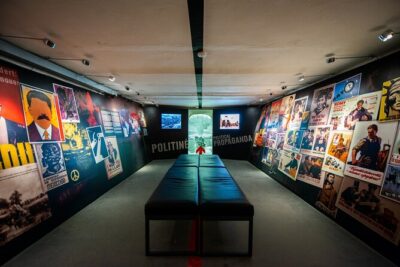
Private Tour: Cold War Museum, Amber Museum, HBH, Palanga Bridge from Klaipeda
Read our review →Browse the lists this tour appears in