
Reviewed · WALKING TOURS
The Majestic and Royal Vilnius Private Walking Tour
Vilnius has a habit of telling stories. This private walk strings together the city’s biggest landmarks and political turning points, with a guide who keeps Vilnius history readable and connected, not random. I love the fully private pacing, and I love how the route covers major sights you actually want to see in a short time. One consideration: it runs on foot for about 2 hours, so plan for weather and comfort.
If you want Vilnius with context, this is the kind of tour that works. The flow goes from the Grand Dukes’ heart of power to Catholic landmarks, then into streets and architecture that show different eras side by side. The possible drawback is the price, because it is $244.99 per person, so it feels most worthwhile when you and your group want a guide’s focus rather than a cheaper group tour.
In This Review
- Key highlights at a glance
- A 2-hour Vilnius walk built around Gediminas and the Grand Duchy
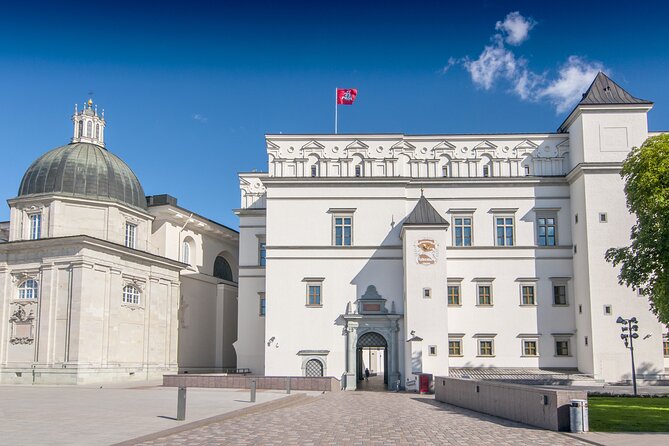
- Starting at the Palace of the Grand Dukes: Vilnius power in one footprint
- Vilnius Cathedral: national worship and major Christian festivities
- Church of St. Casimir: Jesuit timing and a saint’s legend
- Baltic Souvenir and Pilies Street: the Old Town’s main artery
- St. Anne’s Church: a Gothic icon that survives unchanged for centuries
- Vilnius University: Jesuit roots and long-term influence
- Vilnius Ghetto Memorial: adding the hardest history to the city picture
- Presidential Palace: a residence that changed with empires
- Rotuse Town Hall: a Gothic start, rebuilt at the end of the 18th century
- Price and value: when $244.99 per person makes sense
- Booking timing, mobile ticket, and planning for weather
- Who should book this private walking tour
- Should you book The Majestic and Royal Vilnius Private Walking Tour?
- FAQ
- Where does the tour start?
- Where does the tour end?
- How long is the tour?
- Is this tour private?
- How much does the tour cost?
- Are there admission tickets required at the stops?
- Do I need to book far in advance?
- What do I get for ticket access?
- What is the cancellation policy?
- Does the tour run in all weather?
Key highlights at a glance
- Private, at-your-pace guiding for a short, efficient Old Town loop
- A history-first guide style that ties monuments to the people behind them
- Major Vilnius landmarks in one walk, including the Cathedral area and St. Anne’s Church
- Cultural and political range, from Gediminas and Queen Bona to royal and educational themes
- A respectful stop at the Vilnius Ghetto Memorial to add real context
- Free entry at the listed stops, so your time stays on the streets more than ticket lines
A 2-hour Vilnius walk built around Gediminas and the Grand Duchy
What makes this experience feel different is that it is not just a highlight reel. It is a guided story of how Vilnius formed, rose, and ruled, starting with the dream of Great Duke Gediminas. From there, the tour keeps hitting the people and ideas that shaped daily power, education, and culture in the Grand Duchy of Lithuania.
You can expect a clear rhythm: you walk, you look closely, and you get the “why” behind what you’re seeing. That matters because Vilnius Old Town can look like it is all pretty streets and church towers. The guide’s job is to help you connect the buildings to the bigger political and cultural shifts.
More of Vilnius taken slowly on foot:
- Vilnius: 2.5-Hour Jewish Quarter Walking Tour
★ 4.7 · 271 reviews - Regular walking tour of Soviet Vilnius
★ 5.0 · 259 reviews - Vilnius: Regular Walking Tour of Soviet Vilnius
★ 4.9 · 252 reviews - Vilnius Old Town walking tour with snacks
★ 4.8 · 189 reviews
Starting at the Palace of the Grand Dukes: Vilnius power in one footprint
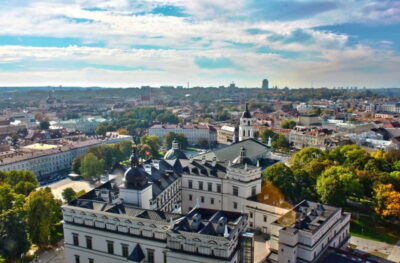
The tour begins at the Palace of the Grand Dukes of Lithuania, in the National Museum area. Even if you are not a museum person, this stop sets the baseline. Vilnius is described as a city that started from Gediminas’ ambition, and this is where the story of rulers, diplomacy, and cultural life is meant to start.
The palace you’ll see is reconstructed, but the point is the role it played in the 15th to 17th centuries. This was once a political and diplomatic hub, not just a royal residence. If you pay attention here, you’ll understand why so many later stops feel like “chapters” in the same book.
Practical tip: give yourself a moment to look around before you move on. Palace area views help you orient for the rest of the walk, especially when you hit the Cathedral and the cluster of churches next.
Vilnius Cathedral: national worship and major Christian festivities
From the palace area, you shift into the Cathedral zone with the Cathedral of St. Stanislav and St. Vladislav. This is presented as the most important place of worship for Lithuania’s Catholics, and also the venue for the country’s main Christian and national festivities.
That combination matters. You’re not just seeing an old church, you’re seeing a site that carries national meaning. A good guide will help you notice how that kind of importance changes what the building represents, even if your focus is primarily architectural.
What to watch for: take your time with the façade and the broader setting. Cathedral areas often feel busy or staged for ceremonies, so arriving with a minute or two of patience helps you get the atmosphere without rushing.
Church of St. Casimir: Jesuit timing and a saint’s legend
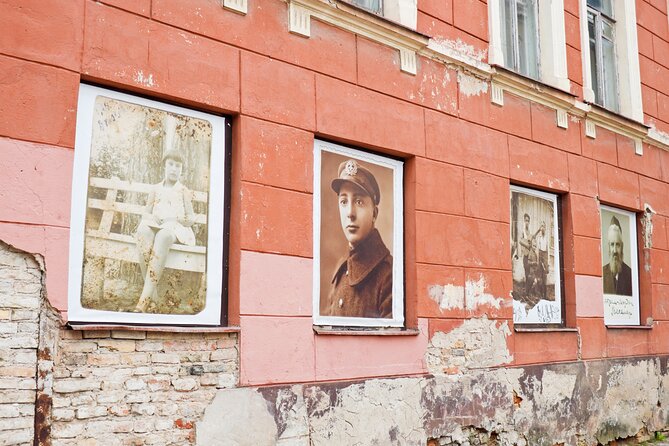
Next up is the Church of St. Casimir, built by the Jesuits. Work began in 1604, just two years after St. Casimir was canonized, and the church is dedicated to his memory. There is also a legend tied to the number of people connected with the saint, reaching the number 700 in the story.
This stop adds a key “how religion moved through institutions” layer. The Jesuits were not only building churches, they were building influence through education and spiritual life. The tour’s larger theme of royal power and education makes St. Casimir feel like a bridge, not a random church stop.
Potential drawback: if you’re photographing, keep an eye on time and foot traffic. Cathedral and church areas often have visitors coming and going, and the best photo angles can be momentary.
Baltic Souvenir and Pilies Street: the Old Town’s main artery
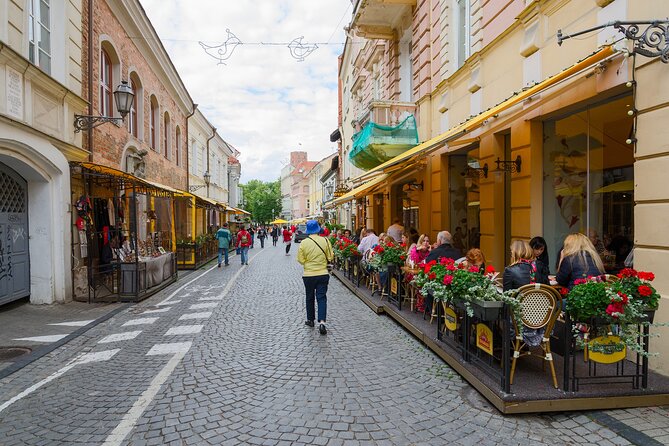
Then you move into the street life with Baltic Souvenir on Pilies Street. Pilies Street is framed as the oldest and most flamboyant street in Vilnius Old Town. It also appeared along the route of the former road from Vilnius Castle toward the south, heading toward Poland and Russia.
This is the first time the tour really shifts from power buildings to movement and trade routes. When the guide mentions that road link, it helps you see why Pilies Street matters. Streets are part of history too, not just the monumental stuff.
You’ll also likely notice a more “shop and stroll” vibe here. That is not bad. It gives your feet a small reset and lets the story cool from formal politics into real city life.
More going on across Vilnius:
St. Anne’s Church: a Gothic icon that survives unchanged for centuries
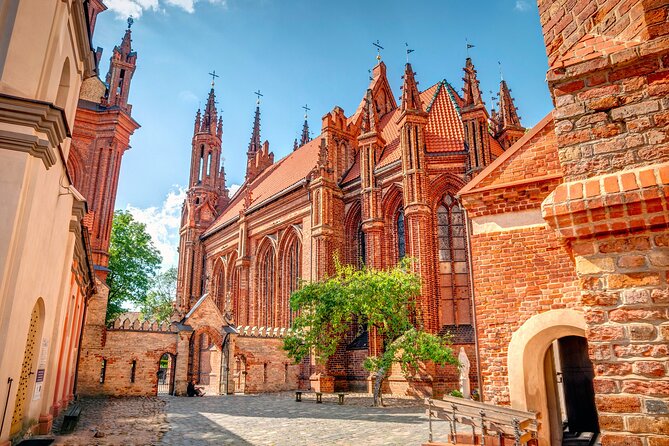
After Pilies Street, you reach St. Anne’s Church, described as a masterpiece of the late Gothic period. The big detail is that it has survived to the present day without changing for over 500 years, which is one of those facts that instantly raises your attention level.
Gothic buildings can feel repetitive if you only look at one feature. A late Gothic icon helps because it rewards close watching, not just skyline glances. In the context of this tour, St. Anne’s becomes proof that different eras left their fingerprints clearly, and that Vilnius preserved some of its visual identity.
Photo note: St. Anne’s is a “work from multiple angles” kind of church. If you’re serious about photos, stand still for a full minute before you decide where to move.
Vilnius University: Jesuit roots and long-term influence
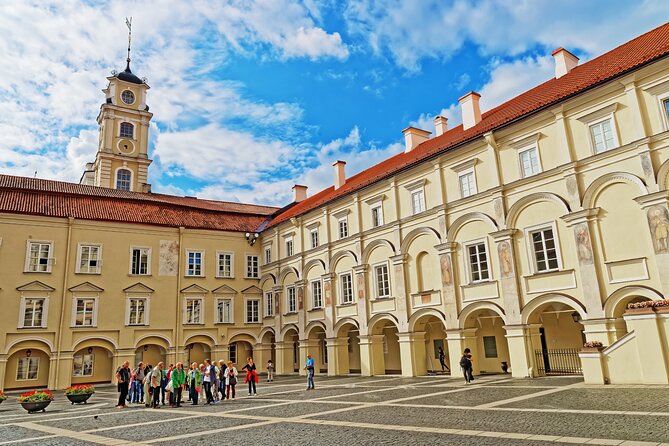
The route then turns toward Vilnius University, presented as the oldest university in the Baltic states and one of the oldest in Northern Europe. It is also said to be Lithuania’s largest university. The key founding detail is 1579, when it began as the Jesuit Academy (College).
This stop connects directly to the tour’s mention of education shaped by Steponas Batoras. When you hear a name tied to education, it can feel abstract until you land in front of a major learning institution. Here, the past feels practical.
Also, universities change neighborhoods. Even if the modern campus feels different from the original buildings, the idea of Vilnius as a learning center adds depth to what you saw earlier at the palace and churches.
What you’ll get from the guide: a sense of why an academy matters politically, not only intellectually. Education creates influence, networks, and long-term power.
Vilnius Ghetto Memorial: adding the hardest history to the city picture
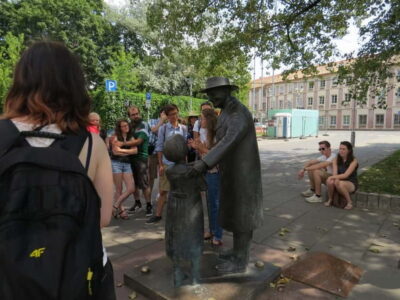
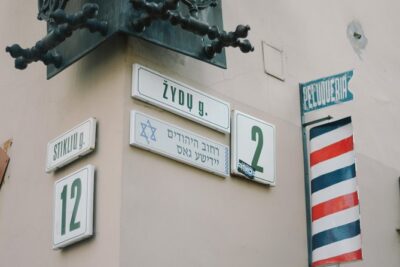
One of the most important stops is the Vilnius Ghetto Memorial. The tour explains that the main Jewish quarter lay west of Didžioji gatvė, with street names like Žydų and Gaono acting as reminders today. It also references the Great Synagogue from 1572 and the synagogue area’s story in the late 1800s and early 1900s.
This is where the tone of the walk shifts. It is not meant to be a quick photo stop. It’s a chance to understand that Vilnius history includes tragedy, not only rulers, churches, and royal hearts.
How to make this stop meaningful: slow down. Let the guide’s explanation do the work, and if you have questions about names or dates, this is the moment to ask.
Presidential Palace: a residence that changed with empires
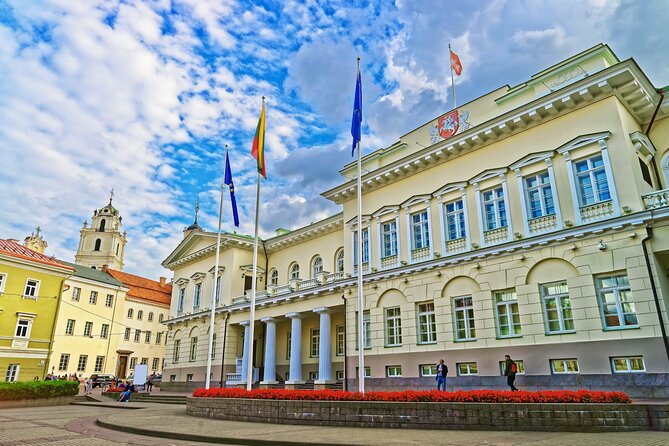
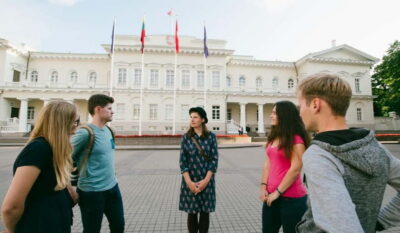
Next is the Presidential Palace. The information here is clear and useful: from the 16th century it served as a residence for Vilnius bishops. In the 18th century, during the period of Lithuania’s occupation and annexation to the Russian Empire, it served as a residence for the Governor general of that empire.
This is the “buildings as power switches” theme in action. The palace is not described as one continuous royal story. It is a site that was repurposed as control changed hands. That detail matters because it explains why architecture and institutions in Vilnius can feel layered.
If your history interest is practical, this stop will click. You’ll understand that the city’s structures were used again and again, by different authorities, and that helped shape what you see today.
Rotuse Town Hall: a Gothic start, rebuilt at the end of the 18th century
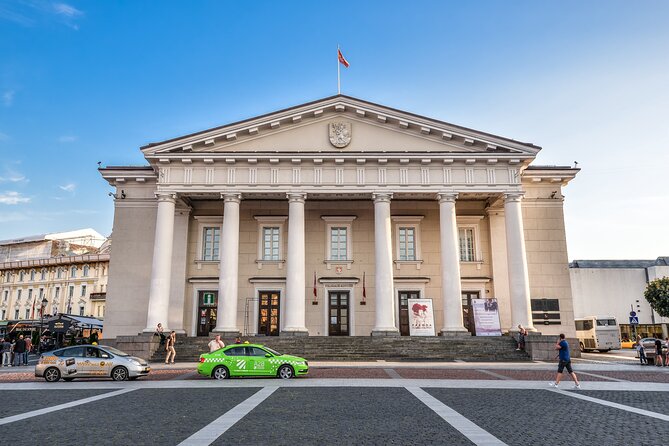
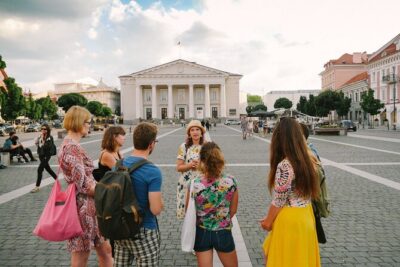
The tour finishes at the Town Hall of Vilnius, known as the Rotuse. Here, the story is about changing styles and rebuilding. It started Gothic and was reconstructed for the last time by architect Laurynas Stuoka-Gucevičius at the end of the 18th century.
Town halls are civic symbols, not royal ones. Ending here gives you a clean last note: Vilnius is not only a place of monarchs and churches, it is also a place where city governance took shape over time. Stuoka-Gucevičius’ involvement helps anchor the rebuild in a recognizable historical period.
Timing tip: use the final stop to ask any last questions while your guide is still with you. If you want to explore on your own after, the Town Hall area is a logical place to regroup.
Price and value: when $244.99 per person makes sense
At $244.99 per person, this is not a budget walk. The value comes from what you get for a short 2-hour window: a fully private guide, a route that hits big landmarks, and a narrative that connects different centuries.
This price can be easier to justify if:
- you care about historical context and want it spoken clearly,
- you prefer moving as a group only within your own party,
- you want major sites without stitching together multiple stops on your own,
- and the group discount applies to your situation.
It can be harder to justify if your goal is mostly casual sightseeing. If you just want to wander Old Town and don’t mind doing some research yourself, a cheaper group tour may work.
The good news is that the experience is described as having free admission at the listed stops. So your cost is mostly for guided time, not for ticket expenses.
Booking timing, mobile ticket, and planning for weather
This tour is typically booked about 48 days in advance. That suggests it’s in demand, likely because it bundles a lot into a short, guided walk. If your dates are fixed, earlier booking reduces the risk of not getting your preferred time.
You also get a mobile ticket, which is handy for a walking route where you might not want to manage paperwork. The experience is near public transportation, which helps if you want to tack on time before or after the tour.
One more real-world point: it requires good weather. If Vilnius is rainy on your dates, you’ll need to adapt. The operator indicates you’ll be offered a different date or a full refund if it’s canceled due to poor weather.
Who should book this private walking tour
This works best for you if:
- you want Vilnius Old Town with a guided thread, not a random list of monuments,
- you enjoy churches, civic buildings, and the history behind institutions like universities,
- you appreciate a mix of beauty and the harder parts of history,
- and you value a pace controlled by your group.
It’s also a solid option for a first-time Vilnius visit. The route gives you a quick map of major sites and the stories behind them, which makes it easier to explore independently later.
Should you book The Majestic and Royal Vilnius Private Walking Tour?
If you’re the type of traveler who likes to understand what you’re looking at, book it. The experience is built for a short, high-impact walk with a guide who has a strong grasp of Vilnius and helps the monuments connect into a bigger story. The private format also makes it easier to ask questions and move at a comfortable speed.
If your budget is tight, you may want to compare against group tours. But if you can afford it, this is the kind of guided walk that saves you time and turns “I saw that” into “I get why that matters.”
FAQ
Where does the tour start?
It starts at the Palace of the Grand Dukes of Lithuania, National Museum, at Katedros a. 4, 01143 Vilnius, Lithuania.
Where does the tour end?
It ends at the Town Hall of Vilnius, Rotušės a., 01128 Vilnius, Lithuania.
How long is the tour?
The tour lasts about 2 hours.
Is this tour private?
Yes. It is listed as a private tour, so only your group participates.
How much does the tour cost?
The price is $244.99 per person.
Are there admission tickets required at the stops?
The listed stops show admission ticket as free, so you should not expect paid entries based on the provided details.
Do I need to book far in advance?
On average, it is booked 48 days in advance, so earlier booking can help you get your preferred date.
What do I get for ticket access?
The tour includes a mobile ticket.
What is the cancellation policy?
Free cancellation is available. You can cancel up to 24 hours in advance for a full refund, based on local time.
Does the tour run in all weather?
It requires good weather. If it is canceled due to poor weather, you will be offered a different date or a full refund.
The newest Vilnius listings
- Premium Lithuanian Craft Beer Degustation★ 5.0 · 1 review
- Vilnius History and Hidden Gems Self Guided Walking Tour★ 5.0 · 1 review
- Private day tour from Vilnius to goat Cheese farm and Kernave historical capital★ 5.0 · 1 review
- Hot Air Balloon Ride in Nemencine★ 5.0 · 1 review
- From Vilnius: Private Day Tour to Wolfs Liar (Hitler’s bunker)★ 5.0 · 1 review
- Explore Vilnius in 60 minutes with a Local★ 5.0 · 1 review
- From Vilnius: Private Tour to Curonian Spit national park★ 5.0 · 1 review
- Explore Vilnius’ Art and Culture with a Local★ 5.0 · 1 review
Walking Tours, compared.
Browse the lists this tour appears in