Reviewed · TOURS
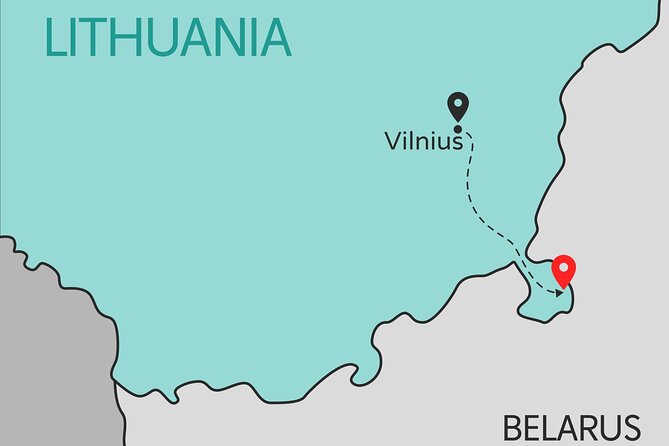
Day tour From Vilnius to Belarus border a frozen corner of Europe
A frozen border tour beats the usual route. This day gets you out of Vilnius and into Lithuania’s far edge for castles, old villages, and a real feel for life near the line, with border stories and unspoilt traditional villages built into the plan. The main trade-off is that it is a fast 9-hour circuit, so you will want warm layers and patience for short stops.
I also like the private setup, since the group is capped at up to 3 and you get pick-up from your location plus an English speaking guide. You get local snacks and bottled water, but there is no lunch, so bring a hunger buffer and expect a winter-focused day.
In This Review
- The Value Pitch: Why This Tour Costs What It Does
- Key Highlights You Will Feel in Day One
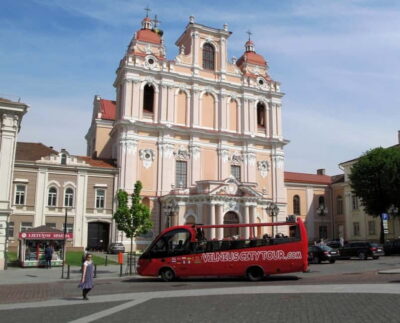
- Starting in Vilnius Old Town, Then Headed Straight to the Frontier
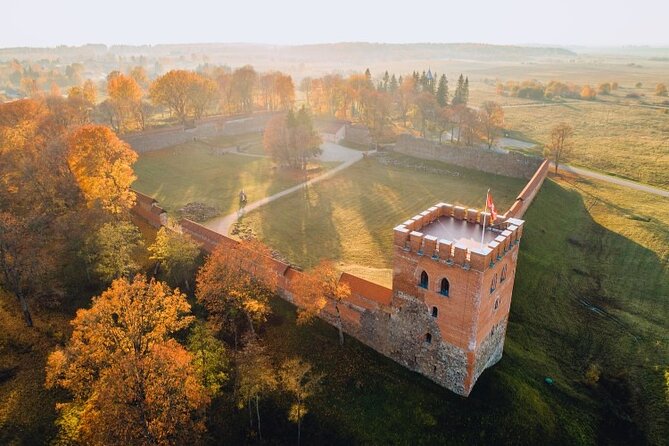
- Medininkai Castle: The First Big Dose of Border-Era Lithuania
- A Quick Look at Turgeliai and the Story Behind Its Name
- Paulavos Republic: When a Peasant State Had Its Own Symbols
- Dieveniškės Loop and the Stalin’s Pipe Checkpoint
- Stakai and the 4 km Isthmus: Documents and Geography Matter
- Ethnographic Villages at Rimašiai: Single Street, Long Time
- Grybiškės: 1,000-Year-Old Oaks and a Protected Pine
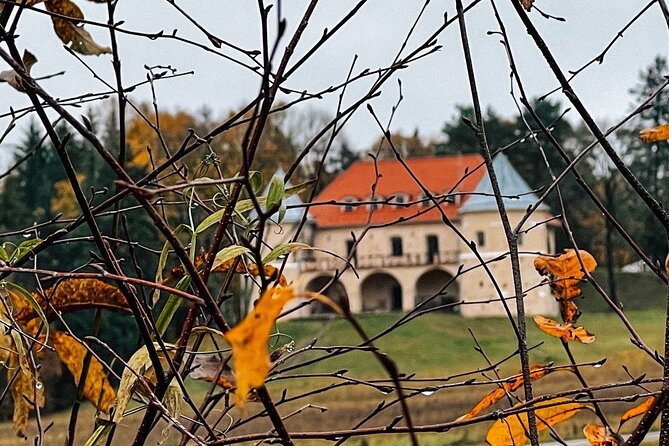
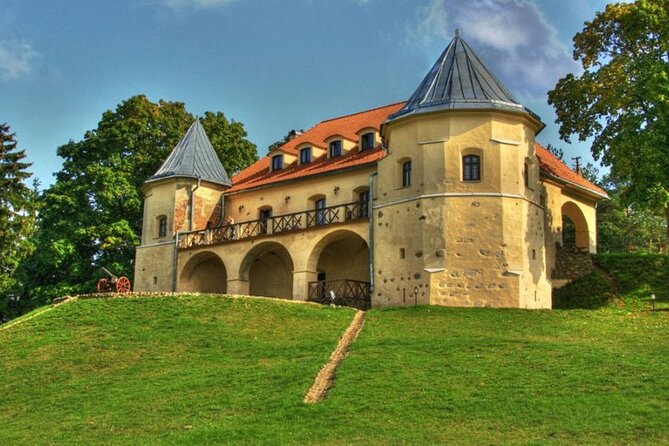
- Norviliskes Castle on the Border: A 16th-Century Finish
- Back to Vilnius, Then Bėčionys Hillfort Views
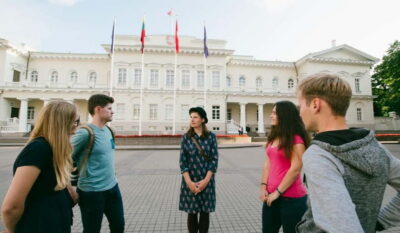
- How It Feels With a Real Human Guide Like Martynas
- Timing, Food, and What to Pack for a Frozen Corner of Europe
- Price and Logistics: When Private Makes Sense
- Should You Book This Vilnius to Belarus Border Day Tour?
- FAQ
- How long is the day tour from Vilnius to the Belarus border?
- What is the price, and how many people are included in a group?
- Is hotel pick-up included?
- Is lunch included?
- Are entrance tickets included for all stops?
- What language is the guide?
- Will I need to show documents at any point?
The Value Pitch: Why This Tour Costs What It Does
This tour is priced per group (up to 3), and that matters. If you have 2 or 3 people, the per-person cost drops fast, and suddenly you are not paying for a crowded bus and a lecture from far away.
In return, you get private transportation for a long border run, an English speaking guide to interpret what you are seeing, and site time that feels more intentional than a quick photo stop. It is also built around places that are less common on the Vilnius “greatest hits” list, including border-side castles and villages shaped by older land reforms.
One more value point: several stops are free, so your “extra costs” are mainly about the one paid admission at Medininkai Castle. If you travel with good winter legs and you care about how people lived near borders, this feels like strong value.
Key Highlights You Will Feel in Day One
- Border-side castles and narrow checkpoint terrain that gives you scale fast
- Paulavos Republic ruins and an 18th-century story of peasant reform under serfdom
- Ethnographic single-street villages from Valakas land reform, with buildings mostly from the late 1800s to early 1900s
- Old oak and pine trees including a 1,000-year-old oak tradition nearby
- A guide-led day flow that helps you read churches, manors, and fort remains without guessing
- Staying close to the border line through isthmuses that are only about 4 km wide
More going on across Vilnius:
- Vilnius: Trakai Tour with Audio Guide and Minibus Transfers
★ 4.3 · 1,054 reviews - Vilnius: 2.5-Hour Jewish Quarter Walking Tour
★ 4.7 · 271 reviews - Regular walking tour of Soviet Vilnius
★ 5.0 · 259 reviews - Vilnius: Regular Walking Tour of Soviet Vilnius
★ 4.9 · 252 reviews
Starting in Vilnius Old Town, Then Headed Straight to the Frontier
You start in Vilnius Old Town with pick-up from your hotel or other location, then drive out toward the Lithuanian-Belarus border area. The tour keeps the day focused, which is great if you want “one topic” rather than a scattershot day of random driving and photos.
This first drive matters more than it sounds. It shifts your mindset from city sightseeing to border country, where space is tight, travel routes feel controlled, and the old sites are often there because they mattered strategically.
You will also get a short, structured start rather than a vague “meet and go.” In practical terms, that means less waiting around, and more time where you can actually see what the day is about.
Medininkai Castle: The First Big Dose of Border-Era Lithuania
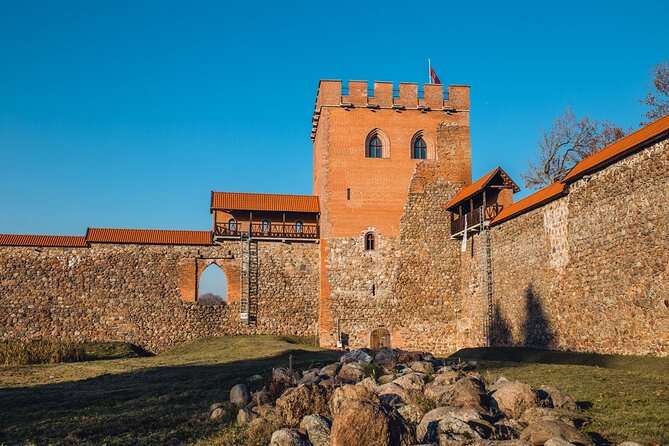
Medininkai Castle sits about 32 km from the Vilnius center, close to the Lithuanian-Belarus border. It dates to the late 13th or early 14th century, and it is described as Lithuania’s largest castle in the current country. The castle also falls into a transitional architectural period, moving from Romanesque to Gothic style, which helps you understand why it looks the way it does.
You get about 45 minutes on site, and admission is not included here. That is the one “paid” element in the main stretch, so it is smart to budget a bit in advance. If you like stonework, fortifications, and older European church-and-castle architecture, this stop gives your eyes something solid right away.
A practical drawback: since this is a border-area site, winter can be tough on footing and comfort. Wear grippy shoes and plan for a shorter browse if it is icy.
A Quick Look at Turgeliai and the Story Behind Its Name
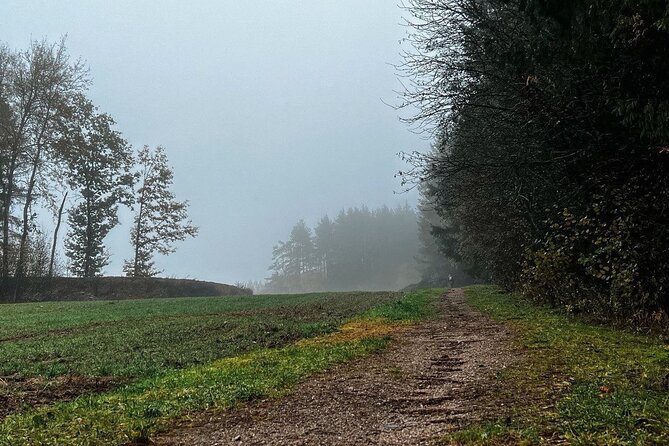
After Medininkai, the route opens into broader countryside. You get a very short stop at Turgeliai, mainly to see a beautiful church.
The useful part here is not just the photo. The name Turgeliai points to large farmers markets in the past, which is a reminder that these border regions were not only about fortresses. They were also about trade, local food systems, and everyday gatherings.
This stop is brief, so if you want long walks, you might feel it is too short. But as a rhythm reset between bigger historical sites, it works.
Paulavos Republic: When a Peasant State Had Its Own Symbols
Then the day shifts into something unusual: the Republic of Paulava, also called Pavlov. This autonomous republic existed in the 18th century in Merkinė, not far from Vilnius, in what is now the Šalčininkai district.
What makes Paulava compelling is how specific it sounds compared to typical “lost town” stories. It had its own constitution, coat of arms, president, peasants’ parliament, money, treasury, mutual assistance fund, militia, and school. Today, you are mostly reminded by fragments of manor house and stables and other surviving structures.
You only get about 30 minutes here, so do not expect a museum-level tour. Instead, expect a focused, guide-led read of the remaining pieces, plus the bigger context of radical and progressive peasant reform in the era of serfdom.
If you like history with clear human stakes, this is one of the stops that can keep pulling you back into the day, even after you leave.
Another courtyard, another few hours of Vilnius:

Dieveniškės Loop and the Stalin’s Pipe Checkpoint
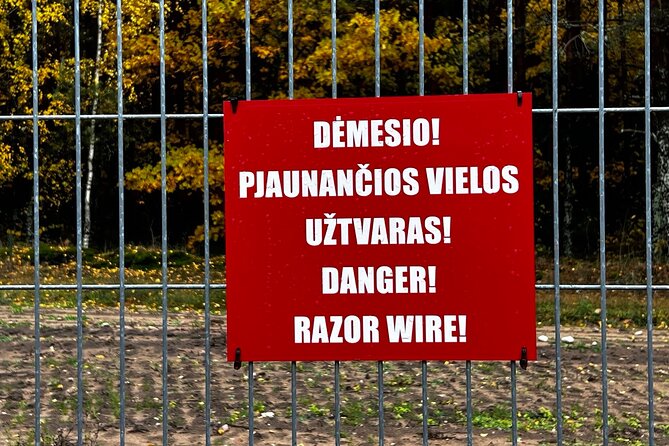
Next comes the narrow land theme, which is the backbone of this whole experience. You drive toward the Dieveniškės Loop, where there is a small checkpoint to enter an area connected with Stalin’s pipe.
The tour description calls out the geography clearly: this is a very thin strip of land about 4 km wide, a peace of land squeezed between borders. That scale is hard to picture until you are actually near it, and the checkpoints make the idea real.
You get about 40 minutes in this section. The practical experience is part viewing, part learning the “why” behind where roads and boundaries run.
Possible consideration: checkpoints and border-area rules can make the timing feel tighter than normal sightseeing. You will want to be on time at each stop, and be ready to pause if asked to show documentation.
Stakai and the 4 km Isthmus: Documents and Geography Matter
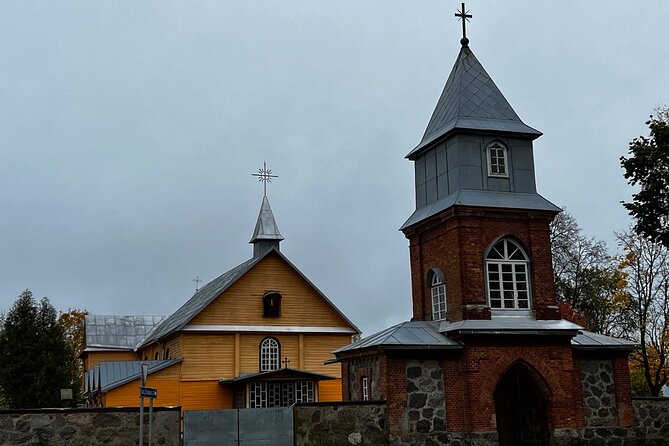
Stakai is another border-area moment, tied to the isthmus idea. You are entering an isthmus checkpoint, and the land here is also described as about 4 km wide, surrounded by the Belarus border.
At the entrance, travelers could be asked to show documents. That detail sounds formal, but it is the kind of thing that changes how smooth your day feels. Bring your passport and any other documents you are traveling with, and keep them accessible.
This stop lasts about 30 minutes, and the value comes from seeing how the terrain creates constraints. On a day built around older sites, this geography stop is what turns history into something you can understand with your own eyes.
Ethnographic Villages at Rimašiai: Single Street, Long Time
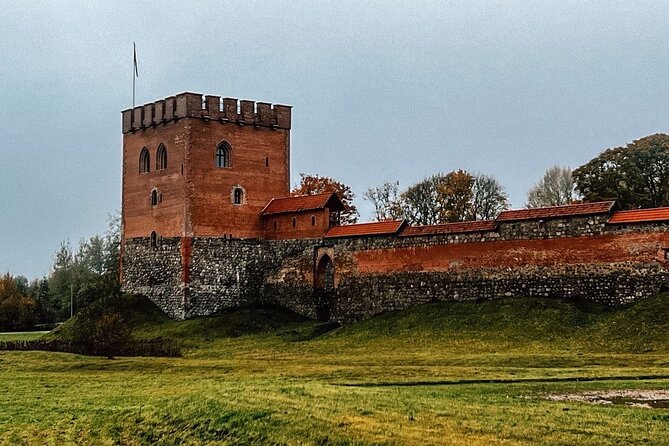
Rimašiai brings you into ethnographic village life. The area includes 13 single-street ethnographic villages such as Lastaučikai, Poškonys, Grybiškės, and Rimašiai.
These villages were formed by the Valakas land reform in the 16th and 17th centuries. The shape of the settlement pattern has been kept to this day, but many of the current buildings were constructed later, mostly in the late 19th and early 20th centuries.
You get about 35 minutes, so again it is not a deep architecture study. It is more like a guided walk that lets you notice the layout and how the reform era still echoes in the village footprint.
Practical tip: if it is cold, this is where you will appreciate a sensible layer setup, since you may be outside longer than you expect for a “short village stop.”
Grybiškės: 1,000-Year-Old Oaks and a Protected Pine
After Rimašiai, you move toward Grybiškės, where the highlight is the long-lived trees. The tour description notes impressive 1,000-year-old Grybiškės and Stakai oak trees, with trunks almost five meters in circumference, described as cousins of the famous Stelmužė oak.
It also calls out the Grybiškės pine, which is about 100 years old and protected by the state.
This is a 40-minute stop, and it can be a relief from stone and checkpoints. When your eyes lock onto a tree that old, you start measuring time differently, and the border area stops feeling like only a political story.
If you enjoy nature, this stop will land well. If you only care about buildings, keep your expectations modest, but still take a moment. This kind of place helps you understand why people chose to live where they did.
Norviliskes Castle on the Border: A 16th-Century Finish
Norviliskes Castle is a 16th-century site that lies right on the Belarus border. The day saves a chunkier historical stop for later, with about 1 hour 30 minutes allocated.
This is one of those locations where “on the border” is not a throwaway line. It adds a layer to why castles existed where they did, and how the border shaped movement, safety, and routes long after the castle era itself.
Admission is listed as free for this stop, which is nice. The main consideration is weather and ground conditions. In winter, a castle visit can be more about pacing and comfort than slow wandering.
Back to Vilnius, Then Bėčionys Hillfort Views
After the border-side circuit, you return to Vilnius for about 2 hours. Then you continue with a final sight at Bėčionių piliakalnis, a hillfort on the right bank of the River Gauja.
You get about 1 hour here, and the big draw is the view from the top of the hillfort. This is a smart way to end: after hours of border tightness, you get a wider outlook again.
One practical note: hilltop views are great, but they can also be windy. Plan for cold gusts and keep your phone ready if you want quick photos.
How It Feels With a Real Human Guide Like Martynas
One of the strongest signals from the experience is the way the guide brings the sites to life. In particular, the name Martynas shows up in feedback for being friendly and making places easier to understand, especially at castles and border-related stops.
A good guide here is not just reading facts. It is translating what you see into why it matters: how a border changes daily life, why a village layout persists, and how ruins and trees connect to older decisions.
If you care about context, you will likely appreciate guide time spent walking into sites and pointing out what to look for, rather than rushing you from one “check the box” photo to the next.
Also, in one described experience, Martynas added extra touchpoints like meeting a village resident and passing through woodier areas for berries and mushrooms, then finishing with local healthy snacks at a manor-style setting. Even if the exact extras vary by day and conditions, the pattern matters: this is a guide-led day, not a drive-by tour.
Timing, Food, and What to Pack for a Frozen Corner of Europe
The tour runs about 9 hours, and the rhythm is stop heavy. You should plan for a day where most places are short and outdoors, even when a stop includes indoor or sheltered time.
Food-wise, you get local snacks and bottled water, but there is no lunch. That is the main thing I would plan around. If you are sensitive to hunger during long drives, grab breakfast before you go, and bring a small extra snack as backup.
For what to wear, think simple winter comfort. This is a border-focused day with cold air, potentially icy ground, and outdoor viewing points. Comfortable layers, gloves, and grippy shoes will make the difference between enjoying the day and simply surviving it.
Price and Logistics: When Private Makes Sense
The price is $570.75 per group for up to 3 people. If you split it across 3, that can be about $190 per person, but the real question is what you value.
You are paying for:
- private transportation for a long route
- pick-up from your location
- an English speaking guide
- multiple sites tied together by geography, not by convenience
If you like big “day theme” trips and you want to avoid crowded transit, private can be a bargain. If you usually travel solo and hate the cost of private pricing, you might compare against multi-stop group tours.
One more logistic point: the tour uses a mobile ticket and has confirmation at booking time. It also requires good weather. If weather is poor, you should expect a different date offer or a full refund.
Should You Book This Vilnius to Belarus Border Day Tour?
Book it if you want something different from the usual Vilnius day plans. I think it is a strong match if you like border history, unusual political stories like the Paulavos Republic, and hands-on geography like isthmuses and checkpoint areas.
You should also book if you enjoy structure. This tour is tight, time-boxed, and guide-led, so you do not lose the day to confusion.
Skip it or choose a different option if:
- you want a slow travel pace with long museum time
- you need a guaranteed sit-down lunch
- you do not handle winter well, since several stops are outdoors and quick
If you are flexible, warm, and curious about how Lithuania looks when you get close to the edge, this is the kind of day that gives you stories you will actually remember.
FAQ
How long is the day tour from Vilnius to the Belarus border?
The tour lasts about 9 hours.
What is the price, and how many people are included in a group?
It costs $570.75 per group, with a group size of up to 3 people.
Is hotel pick-up included?
Yes. Pick-up is offered from your location.
Is lunch included?
No. Lunch is not included.
Are entrance tickets included for all stops?
Not all. Medininkai Castle lists admission as not included, while other stops are shown as free.
What language is the guide?
The tour is offered with an English speaking guide.
Will I need to show documents at any point?
At the Stakai checkpoint, travelers could be asked to show documents.
The newest Vilnius listings
- Premium Lithuanian Craft Beer Degustation★ 5.0 · 1 review
- Vilnius History and Hidden Gems Self Guided Walking Tour★ 5.0 · 1 review
- Private day tour from Vilnius to goat Cheese farm and Kernave historical capital★ 5.0 · 1 review
- Hot Air Balloon Ride in Nemencine★ 5.0 · 1 review
- From Vilnius: Private Day Tour to Wolfs Liar (Hitler’s bunker)★ 5.0 · 1 review
- Explore Vilnius in 60 minutes with a Local★ 5.0 · 1 review
- From Vilnius: Private Tour to Curonian Spit national park★ 5.0 · 1 review
- Explore Vilnius’ Art and Culture with a Local★ 5.0 · 1 review
Tours, compared.
Trakai Tour with Audio Guide and Minibus Transfers
Read our review →