
Reviewed · CURONIAN SPIT TOURS
Walking Tour in Palanga – Capital of Amber
Amber has a smell, and Palanga has style. This private walking tour in Palanga, the Baltic amber capital, helps you get your bearings fast while a local guide shares a rare inside view of the town’s best-known landmarks and the quieter spots most people skip. I like that the guide keeps the rhythm comfortable for a true stroll, not a race through photo stops.
I also love the mix of sights and craft. You start at the Amber Museum and end with an amber-processing workshop demonstration where you can see how rough amber turns into polished pieces, plus you get practical tips for buying souvenirs without overpaying. It’s a tour that makes amber feel less like a novelty and more like a local skill.
One consideration: not everything is included in the ticket price. The Amber Museum is a paid stop, and some locations may require extra permission fees for taking pictures or videos, so you’ll want to budget a little extra on the spot.
In This Review
- Key highlights worth planning for
- Palanga’s amber identity, explained on foot
- The meeting point and the 3-hour private pace
- Stop 1: Palanga Amber Museum, Tiškeviciai Manor, and the Solar Stone
- Stop 2: Birute Park, sculptures, and seasonal fountain moments
- Stop 3: Birute’s Hill dunes, the Palanga Bridge, and Basanavicius Street energy
- Stop 4: Church of the Assumption and the amber workshop demo
- Amber polishing in the Amber Chamber, plus what it means for souvenir shopping
- Price and value: what you’re paying for, and what costs extra
- Weather, walking feel, and how to dress for Palanga
- Who should book this Palanga walking tour
- Should you book this Palanga Amber tour?
- FAQ
- How long is the Walking Tour in Palanga?
- Is the Amber Museum ticket included?
- What stops are included in the tour?
- When is the Amber Museum closed?
- Do I need extra payment to take photos or videos?
- What is the cancellation policy?
Key highlights worth planning for
- Private guide, full attention for a smoother, more personal Palanga walk
- Amber Museum visit tied to the story of the Tiškeviciai Manor house and famous amber inclusions
- Birute Park + Birute’s Hill for both sculptures and dune-and-coast views
- Basanavicius Street timing so you hit the lively core without losing your morning or afternoon flow
- Amber-processing demonstration in an artisan workshop, plus souvenir discount opportunities
- Photo and video permission costs at certain objects (plan ahead)
Palanga’s amber identity, explained on foot
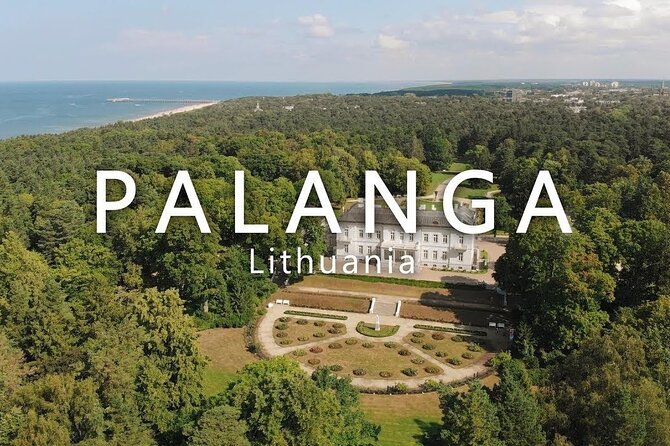
Palanga is one of those places where the town itself feels like part of the attraction. You’re not just seeing monuments, you’re moving through seaside streets, estate parks, and beachside dunes that shaped how the resort grew. The walking format matters here because Palanga’s charm is in the transitions, from pine-scented greenery to the Baltic breeze, and from quiet paths to the hum of Basanavicius Street.
This tour is built to help you make sense of it all. Your guide doesn’t just point. You get an inside perspective on top landmarks and hidden gems, and you’ll also hear the kind of practical context that turns random buildings into meaningful stops. It is the difference between taking snapshots and actually understanding what you’re looking at.
And yes, amber stays the thread. Starting with the museum and ending with processing, the tour connects the collection to the craft. That connection is what makes Palanga’s amber focus feel real.
More of the Spit, its dunes and its villages:
- Day group tour: Curonian Spit (Neringa) from Klaipeda (EN)
★ 4.9 · 78 reviews - From Klaipeda: Curonian Spit Full-Day Private Tour
★ 4.7 · 33 reviews - MIGHTY SANDS – Premium guided canoe tour at Curonian spit National Park
★ 5.0 · 26 reviews - Private Tour: Curonian spit (Neringa) from Klaipeda
★ 5.0 · 23 reviews
The meeting point and the 3-hour private pace
The tour starts at Vytauto g. 17, Palanga, and it ends back at the same meeting point. It’s designed to be about 3 hours (approx.), which is a sweet length for first-timers. You get enough time for the key landmarks, but you still have energy left to wander on your own afterward.
Because it is a private tour, you’re not squeezed between larger groups. That matters on a walking route that mixes short distances with a few longer “look here first” moments like Birute’s Hill and the Basanavicius Street area. If you like a calm pace with guidance, this format is a good fit.
You also get a mobile ticket, plus travel paperwork documentation. That kind of small admin support can save you time at the start, especially if you’re syncing plans in a resort town where schedules can vary.
Stop 1: Palanga Amber Museum, Tiškeviciai Manor, and the Solar Stone
Your first major stop is the Palanga Amber Museum, founded in 1963 and housed in the Tiškeviciai Manor house. This is a beautiful way to begin because it sets the tone for the rest of the tour. You don’t yet feel like you’re in a craft shop, you feel like you’re stepping into a curated story.
Here’s what makes this museum visit especially worthwhile:
- It has more than 29,000 exhibits, so you’re not looking at a small highlight reel.
- The museum is known for one of Europe’s largest collections of inclusions.
- One standout is the largest protected Ginara block, often referred to as the Solar Stone, weighing about 3.5 kg and claimed to be worth around 1.5 million litas.
You’ll likely take your time here, and your itinerary time allocation is about 1 hour. Admission is not included, so you’ll need to pay the museum ticket separately. If you can, come prepared to spend that hour actively reading and looking. This is not a museum where you can skim and still feel satisfied.
A practical note: the Amber Museum is closed on Mondays and public holidays. If you’re planning a weekday visit, double-check your schedule before locking in your day.
Stop 2: Birute Park, sculptures, and seasonal fountain moments
Next you head to Birute Park, a stop that feels like a palate cleanser after the museum’s indoor attention. This botanical-style estate park sits around the Amber Museum and Birute’s Forest area. It is one of Palanga’s most visited places, and for good reason.
The key appeal here is that you get:
- Seasonal flowers and springing fountains
- Sculptures scattered through the park
- A relaxed walking environment that helps you settle into Palanga’s pace
You’re given about 35 minutes here, and admission is free. That makes Birute Park one of the best value stops on the route because the time is enjoyable and the cost is zero.
One small drawback for some travelers: parks are weather dependent. If it rains hard, the fountains and flower atmosphere can be less impressive. Still, the walk itself is pleasant, and it acts as a bridge between museum time and dune-and-street views.
Stop 3: Birute’s Hill dunes, the Palanga Bridge, and Basanavicius Street energy
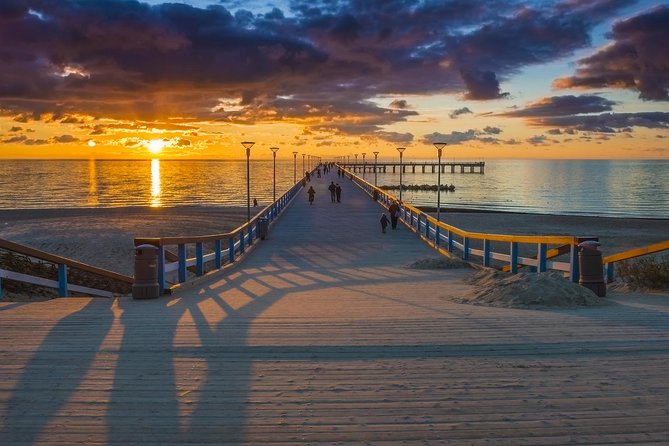
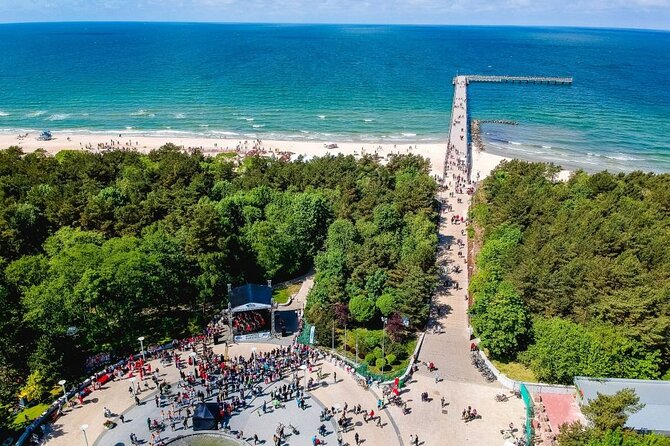
Birute’s Hill is the kind of stop you remember later, because it gives you height and perspective in a seaside town. It is described as the highest dune on the beach in Palanga, and you’ll also connect the views to major town symbols like the Palanga Bridge and J. Basanavicius Street.
Your itinerary here is another 35 minutes, and it is free. The route context helps a lot:
- Birute’s Hill gives you a better look at the coast setting.
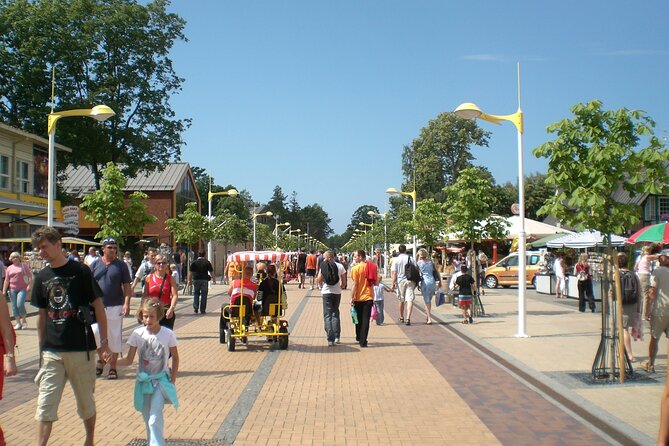
- Basanavicius Street is almost 500 meters long and ends at the Baltic Sea shore where you can see the Palanga Bridge.
- Basanavicius Street is treated like a symbol of Palanga, with the street constantly cleaned, restored, and treasured.
After the dune view, the street area is where Palanga becomes very “resort.” You’ll pass or browse a section with souvenir shops, cafes, bars, night clubs, and recreational areas. That mix can be fun, but if you prefer quieter moments, treat this part like the zone to use for quick shopping and then step back for calmer wandering.
Tip: if you want photos without crowds, aim to stay a bit flexible with your timing on the street segment. Your guide can help you position your time so you still enjoy the views.
More amber to handle and take home:
Stop 4: Church of the Assumption and the amber workshop demo
The tour ends by the Church of the Assumption of the Virgin Mary, which gives the walk a strong “final landmark” feel. But the real payoff is what comes right after, the amber-processing demonstration in a workshop run by amber craftsmen guild members.
This is the part that turns the museum’s facts into something you can picture:
- You’ll see amber processing technology start from a simple piece of amber.
- Then it progresses toward full production of a product.
- You’ll also have a chance to buy amber souvenirs, and the tour includes mention of cheaper souvenir discounts at the workshop.
You get about 35 minutes for this stop, and it’s free on top of the tour. For many people, it is the most memorable section, because you’re watching real steps instead of just reading labels. It also helps you shop with better questions in mind, like what you’re actually paying for, whether it’s polished versus processed, and what the workshop is offering.
A final planning note: the tour data indicates you may need to pay extra for permission to take pictures and videos of certain objects. If photography is a priority, be ready for that reality and ask before you lift your camera.
Amber polishing in the Amber Chamber, plus what it means for souvenir shopping
Besides the workshop demo, the tour includes a stop called the Amber Chamber for an amber polishing demonstration. That detail matters because polishing is where amber’s look changes. You go from raw character to a finished surface that actually catches light.
This is also where you start seeing how small differences in processing translate into how pieces look and how they’re priced. Even if you are not buying anything, the demonstration helps you evaluate what you’re seeing in shops. Once you understand the basic steps, you’re less likely to be steered by big claims and more likely to notice the practical differences.
And yes, you’ll likely encounter souvenir discounts tied to the workshop. Use that advantage wisely. If you see something you like, compare it against what you saw being processed at the end. That way you’re buying with context, not just with vibes.
If your top goal is shopping, keep in mind that the tour does not promise that every souvenir opportunity is the cheapest in town. Instead, it gives you a guided path and a craft-based place to buy, which is often the safer bet.
Price and value: what you’re paying for, and what costs extra
At $115.76 per person for about 3 hours, the price is best understood as paying for:
- A professional local guide who keeps the route logical and the explanations focused on Palanga
- Private pacing, meaning you are not getting rushed or diluted by a larger group
- A guided sequence that links the Amber Museum to parks, dunes, town symbolism, and craft demonstrations
- Included experiences like the Amber Chamber polishing demonstration and the end workshop demo
- Mobile ticket use and travel paperwork documentation
What you should expect to pay extra for:
- Amber Museum admission (not included)
- Any other paid attractions marked with an asterisk in the itinerary notes
- Photo and video permission fees at certain objects, if required
- Meals, beverages, personal expenses, and any gratuities
So is it worth it? For me, the value hinges on whether amber is truly your theme and whether you want context. If you just want a quick museum visit and a beach stroll, a cheaper self-guided approach might work. But if you want a guided story that connects collections to craft, this is a tidy way to do it in one morning or afternoon without bouncing between locations on your own.
Also, private format value is real in Palanga. Some towns are easy to DIY. Palanga has enough “town symbols” and named landmarks that guidance can cut down confusion and help you spend more time looking at the right things.
Weather, walking feel, and how to dress for Palanga
Palanga is a seaside resort, so plan for changeable conditions. The walking route includes parks, dunes, and a street segment where you’ll likely spend time looking around. Even if the total walk time is not huge, you’ll want comfortable shoes.
From one past review, I’d pay attention to the fact that Palanga is good for walking with a generally flat gruset-style surface and a layout that works for strolling through both park-like forest areas and the beach. That supports the idea that this is an easygoing walking tour for most people.
Still, bring layers. Coastal wind can change how long you want to linger at viewpoints, especially around Birute’s Hill and the bridge-area lookouts.
Who should book this Palanga walking tour
This tour is a strong match if you:
- Want an easy first Palanga plan that still feels meaningful
- Like hands-on explanations tied to what you see
- Are interested in amber as a local craft, not just a souvenir category
- Prefer a private guide over the larger group vibe
It may not be the best fit if you:
- Only want low-cost, self-guided wandering and are fine reading museum labels on your own
- Are extremely tight on photo permission fees or museum admission extras
- Are visiting on a Monday or public holiday when the Amber Museum is closed, unless you are willing to adjust your day
The beauty of the tour is that it does more than name places. It gives you enough context to make your later independent wandering smarter.
Should you book this Palanga Amber tour?
If amber is your thing, I think you should book. This tour is built to connect the big museum story to the real craft steps you see at the workshop, and the private guide helps the whole route feel coherent. It also gives you a well-paced way to experience Palanga’s key identity markers: Birute Park, Birute’s Hill dunes, Basanavicius Street, and the church area that anchors the ending.
I’d book it especially if you want value in understanding, not just checkmarks. The museum is paid, and some photo rules can add a small extra cost, but the structure and included amber experiences are exactly what make the price feel justified for a first visit.
If you’re only in Palanga for a quick taste, you might consider trimming your plan. But for a proper introduction to Palanga’s amber culture on foot, this is a solid, practical choice.
FAQ
How long is the Walking Tour in Palanga?
The tour lasts about 3 hours (approx.).
Is the Amber Museum ticket included?
No. The Amber Museum admission ticket is not included, and paid attractions are paid by tourists.
What stops are included in the tour?
The tour includes stops at the Palanga Amber Museum, Birute Park, Birute’s Hill and Basanavicius Street area, and the Church of the Assumption of the Virgin Mary, plus an amber polishing demonstration and an amber-processing workshop demonstration.
When is the Amber Museum closed?
The Amber Museum is closed on Mondays and public holidays.
Do I need extra payment to take photos or videos?
You may need to pay extra for permission to take pictures and videos of certain objects.
What is the cancellation policy?
This experience is non-refundable and cannot be changed for any reason. If you cancel or ask for an amendment, the amount you paid will not be refunded.
More of Klaipeda Taken Slowly on Foot
- Klaipeda: Old Town Walking Tour★ 4.5 · 9 reviews
- The best of Klaipeda walking tour★ 5.0 · 2 reviews
- Vilnius: 2.5-Hour Jewish Quarter Walking Tour★ 4.7 · 271 reviews
- Regular walking tour of Soviet Vilnius★ 5.0 · 259 reviews
The newest Klaipeda listings
- Private Transfer: from Klaipeda to Vilnius via Trakai Castle★ 5.0 · 1 review
- The Hill of Crosses and other pilgrimage sites of western Lithuania★ 5.0 · 1 review
- Private Transfer: Klaipeda to Ryga via Hill of Crosses & Rundale Palace★ 5.0 · 1 review
- Individual Bike Tour in Nemunas Delta and Curonian Spit★ 5.0 · 1 review
- Private Tour of the Curonian Spit – a UNESCO World Heritage Site★ 5.0 · 2 reviews
- Day Tour to Curonian Spit a Treasure on the Baltic Sea★ 5.0 · 2 reviews
- The best of Klaipeda walking tour★ 5.0 · 2 reviews
- From Klaipėda: Palanga and Amber Museum Guided Tour★ 5.0 · 3 reviews
Curonian Spit Tours, compared.
Day group tour: Curonian Spit (Neringa) from Klaipeda (EN)
Read our review →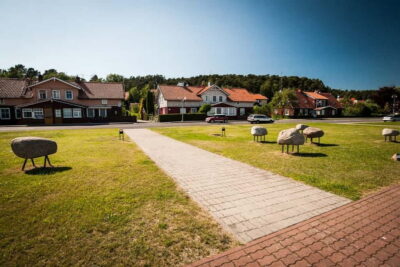
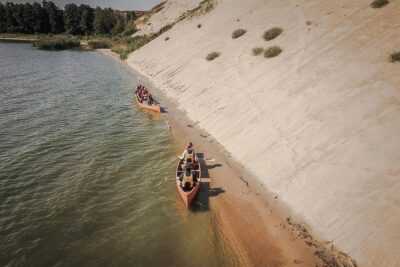
MIGHTY SANDS – Premium guided canoe tour at Curonian spit National Park
Read our review →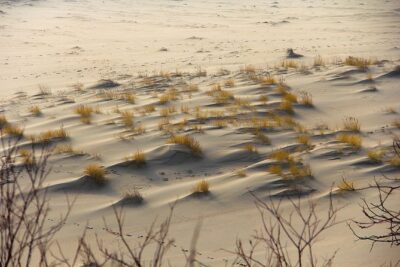
Best of Klaipeda & Curonian Spit Join-in Shore Excursion
Read our review →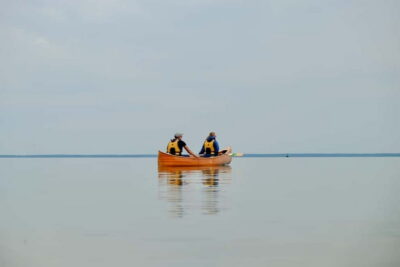
Guided Canoe Tour of the Curonian Spit Lithuania
Read our review →Browse the lists this tour appears in