
Reviewed · HILL OF CROSSES EXCURSIONS
The Hill of Crosses and other pilgrimage sites of western Lithuania
One hill, thousands of reasons to reflect. This western Lithuania pilgrimage day links Lithuania’s long hold on sacred tradition to Soviet-era defiance and today’s living faith. You’ll visit Kryziu Kalnas (Hill of Crosses), the Kretinga Bernardine monastery complex, and Klaipeda’s standout St. Casimir Church, all framed by an English speaking guide who ties each site to the why behind the rituals.
What I like most is the way the tour turns sightseeing into a clear story, especially at the Hill of Crosses with its 19th century roots and a staggering collection of over 200,000 crosses. I also like the blend of famous landmarks and quieter spiritual corners, like the off tourist track Lourdes of Kretinga spring. One thing to consider is that the day depends on good weather, since the main sites are outdoors, so plan for flexibility.
In This Review
- Key things to know before you go
- A private pilgrimage day from Klaipeda that connects faith across centuries
- Stop 1: Kryziu Kalnas Hill of Crosses, 200,000+ crosses and the Soviet-era story
- What to watch for during your 30 minutes
- Stop 2: Kretinga Bernardine Friary complex, 17th century doors and a dramatic raid
- The best part of this stop
- Stop 2.5: Lourdes of Kretinga spring, a belief in healing that locals keep alive
- How to get the most from a short stop
- Stop 3: St. Casimir Church in Klaipeda, modern stained glass built around powerful symbols
- Why the stained glass matters here
- Price and timing: what you really get for $453.79 per group
- Who this tour suits best (and who should choose something else)
- Practical expectations for your 8 to 9 hour itinerary
- Should you book this Hill of Crosses pilgrimage tour from Klaipeda?
- FAQ
- How long is the Hill of Crosses and western Lithuania pilgrimage tour?
- Is this tour private?
- What is included in the price?
- What is not included?
- Does the tour offer pickup?
- Is there a cancellation fee?
- Can most people participate?
Key things to know before you go
- Kryziu Kalnas details: built in the 19th century during Soviet rule, with a collection of 200,000 plus crosses.
- A specific historical moment: at the Kretinga Bernardine Friary, you’ll see 17th century church doors damaged by Swedish soldiers.
- Modern sacred art in Klaipeda: St. Casimir Church highlights large modern stained glass, including a hanging altar size 11 x 4.5 m.
- A quieter faith stop: you’ll also visit Lourdes of Kretinga, where the spring water is believed to cure different diseases.
- Small group feel: private tour for only your group, up to 3 people, with an English speaking guide.
A private pilgrimage day from Klaipeda that connects faith across centuries
This is not the usual rushed checklist tour. It’s a guided pilgrimage circuit that helps you understand how Lithuanian spirituality moved through huge political shifts, from Christianization to Soviet oppression, and then into today’s ongoing devotional life.
You start in Klaipeda, and you’ll spend roughly 8 to 9 hours total with three focused stops. Each stop is about 30 minutes, which means you get enough time to look closely and ask questions without turning the day into a blur. Pickup is offered, and you receive a mobile ticket, so you are not stuck juggling paper confirmations.
One practical note: the tour includes pickup offered, yet it also says private transportation is not included. That likely means your exact transfer situation depends on the arrangement for your group. I’d confirm how you’ll move between stops when you book, so expectations match reality.
More journeys up to the Hill of Crosses:
- Private Transfer: Klaipeda to Ryga via Hill of Crosses & Rundale Palace
★ 5.0 · 1 review - Full-Day The Hill of Crosses Tour from Vilnius
★ 4.5 · 116 reviews - The Hill of Crosses: Full-Day Tour from Vilnius
★ 4.8 · 83 reviews - Tour from Vilnius – Riga via The Hill of Crosses, Rundale, Bauska
★ 4.5 · 67 reviews
Stop 1: Kryziu Kalnas Hill of Crosses, 200,000+ crosses and the Soviet-era story
Kryziu Kalnas, also called the Hill of Crosses, is the emotional anchor of the whole day. The site was erected in the 19th century during Soviet rule, and it grew into one of those places where you can feel how people respond when public religion is pressured. You get to see a huge collection of over 200,000 different crosses gathered from all around the world.
What makes the visit more than a photo op is the structure of the stop. You’ll get time for amazing photos, yes, but you’ll also have a guided discussion of who, what, when, why, and how. That helps you read what you’re looking at. Instead of random symbols, you start seeing it as a living language of prayer, grief, memory, and resilience.
A detail worth knowing: Pope St. John Paul II visited the Hill of Crosses in 1993. Even if you have no background, it adds another layer to the site’s reach. You’re not just looking at Lithuanian devotion, you’re seeing how global faith has intersected with local persistence.
What to watch for during your 30 minutes
- Plan your photo spots early, since the hill is visually intense and you’ll want at least one wide shot plus close images.
- Expect it to feel busy in bursts even if you arrive mid flow. If you want calmer corners, keep moving slowly instead of standing still in the loudest clusters.
Stop 2: Kretinga Bernardine Friary complex, 17th century doors and a dramatic raid
From the hill of crosses, the day shifts into architectural memory. The stop is the ensemble of the Franciscan monastery and Church of the Lord’s Revelation to the Blessed Virgin Mary in Kretinga.
Inside the church, you’ll focus on a striking artifact: the doors from the 17th century church, chopped by Swedish soldiers who tried to enter the monastery with the purpose to rob it. That story lands differently once you see the physical evidence in front of you. You’re not just hearing about conflict in a textbook way. You’re seeing what violence looks like when it becomes part of a sacred building’s history.
Even with only about 30 minutes, the guide’s narration matters here. It helps you connect the object to the bigger pattern of Europe’s shifting borders and empires, and how monasteries often became targets because they held both wealth and influence. The result is a church stop that feels like a real-time history lesson, but still anchored in faith.
The best part of this stop
You’ll get more than one layer: first the church interior with the doors and story, then a turn outward toward a devotional site.
More along the coast at Klaipeda:
Stop 2.5: Lourdes of Kretinga spring, a belief in healing that locals keep alive
Right after the monastery church stop, you’ll go off the tourist track to the Lourdes of Kretinga with the spring. It’s one of those places where the mood changes. The setting feels less like a ticketed attraction and more like local devotion at work.
People believe the water can cure various diseases. That claim is part of the site’s meaning, and the guide framing helps you treat it respectfully, even if you personally look at healing beliefs with curiosity rather than certainty.
This is also where you’ll appreciate the pacing of the tour. The day includes a major outdoor landmark, then a history-heavy monastery complex, and then this quietly spiritual stop. That mix prevents the experience from feeling repetitive.
How to get the most from a short stop
Since you only have about 30 minutes at this overall stop area, keep your expectations realistic. You can look around, listen to the story, and take a few photos, but you cannot do slow wandering. If you want a deeper look, it’s better to ask one good question of the guide while you’re there.
Stop 3: St. Casimir Church in Klaipeda, modern stained glass built around powerful symbols
Back in Klaipeda, the final site is St. Casimir’s Roman Catholic Church. It’s described as one of the largest modern churches in Klaipeda, and the focus is modern stained-glass art.
The stop is built around specific, impressive visual details. You’ll walk around the church and discover what the guide calls hidden gems, including:
- a largest hanging stained-glass altar of the risen Jesus in Lithuania, and possibly Europe, measuring 11 x 4.5 m
- a crown-shaped concept connected to the church’s design
You’ll also learn something contextual: the church was built in what had been the land of King Frederick William III of Prussia. That adds a historical hinge point, so the building doesn’t feel like it appeared out of nowhere. It’s a layered site, with political geography and religious architecture tied together.
If you’re lucky, you’ll have a talk with the priest. Since it’s not guaranteed, I’d treat this as a bonus, not a plan. Still, it’s exactly the kind of moment that turns a church visit from visual viewing into real human connection.
Why the stained glass matters here
Stained glass in many European churches is old and expected. What makes this feel different is the emphasis on modern sacred art, so you get to see how faith expresses itself in contemporary design. For me, that’s often where people underestimate the value of a church stop. You are not only looking for age, you are looking for meaning.
Price and timing: what you really get for $453.79 per group
The price is $453.79 per group, up to 3 people, for about 8 to 9 hours. That means you should do quick math based on how many people are in your party.
For one person, the cost is high on paper. But for a couple or a small group, it can start to feel reasonable, especially because:
- the tour includes an English speaking guide
- entry tickets at the stops are free
- the itinerary is tight enough to see three meaningful sites in one day
- it’s private, so you are not stuck with a big-group pace
Also, the stops are relatively short at about 30 minutes each, which can be a value if you want structure. You still get guided context, but you are not trapped sitting for hours in transit with no payoff.
On the flip side, lunch is not included. So you’ll likely need to budget time and money for a meal around the tour schedule. And donations in churches are not included, which matters at sacral sites where people may contribute as part of their respect.
Who this tour suits best (and who should choose something else)
This is a strong pick if you want a meaningful day without turning it into a history lecture. It’s especially good for:
- couples or friends who want a private itinerary
- people who enjoy symbolism and storytelling, not just architecture
- travelers who like pilgrimage sites but want context, not random wandering
- anyone with limited time in the region who still wants a spiritual and cultural hit
It might be less ideal if you dislike outdoor stops or you hate anything that requires weather luck. Since the experience requires good weather and includes outdoor components like the Hill of Crosses, a rainy day could affect timing.
Practical expectations for your 8 to 9 hour itinerary
Plan for a full day. Even though each stop is short, the total time adds up once you include driving and guided movement between sites.
Here’s what that rhythm feels like in real life:
- Stop 1 sets the emotional tone, with lots of time for photos and guided interpretation.
- Stop 2 shifts into historical detail at the Kretinga friary, anchored by the story behind the damaged 17th century doors.
- Stop 2.5 changes the atmosphere with Lourdes of Kretinga spring devotion.
- Stop 3 ends with modern art inside a major church, focusing on stained glass and symbolic design.
If you’re the type who likes to ask questions, this format works well because each site comes with a clear topic. You won’t have to wait until the end of the day for your best curiosity.
Should you book this Hill of Crosses pilgrimage tour from Klaipeda?
If your idea of a great day is a mix of moving pilgrimage sites plus real guided context, I think this is a smart booking. The Hill of Crosses alone can be overwhelming in the best way, and the guide’s “who, what, when, why, how” approach helps you make sense of what you’re seeing. Then you get history at Kretinga, including the Swedish soldiers story tied to 17th century doors, and you finish with modern stained glass in St. Casimir Church, including the impressive 11 x 4.5 m hanging altar.
Book it if you want a private, small group day that feels respectful and structured, not chaotic. Consider another option if weather worries you or if you want a longer, unhurried visit where you can spend extended time in one place. For most people, though, this is a strong value way to see multiple sacred highlights of western Lithuania in one day, starting from Klaipeda.
FAQ
How long is the Hill of Crosses and western Lithuania pilgrimage tour?
The tour lasts about 8 to 9 hours.
Is this tour private?
Yes. It is a private tour with only your group participating, up to 3 people.
What is included in the price?
An English speaking tour guide is included. Admission tickets for the listed stops are free.
What is not included?
Donations in the churches, lunch, and private transportation are not included.
Does the tour offer pickup?
Pickup is offered.
Is there a cancellation fee?
Cancellation is free. You can cancel up to 24 hours in advance for a full refund.
Can most people participate?
Most travelers can participate, and the experience requires good weather. If it is canceled due to poor weather, you will be offered another date or a full refund.
The newest Klaipeda listings
- Private Transfer: from Klaipeda to Vilnius via Trakai Castle★ 5.0 · 1 review
- Private Transfer: Klaipeda to Ryga via Hill of Crosses & Rundale Palace★ 5.0 · 1 review
- Individual Bike Tour in Nemunas Delta and Curonian Spit★ 5.0 · 1 review
- Private Tour of the Curonian Spit – a UNESCO World Heritage Site★ 5.0 · 2 reviews
- Day Tour to Curonian Spit a Treasure on the Baltic Sea★ 5.0 · 2 reviews
- The best of Klaipeda walking tour★ 5.0 · 2 reviews
- From Klaipėda: Palanga and Amber Museum Guided Tour★ 5.0 · 3 reviews
- From Klaipėda: Curonian Spit Day Trip with Guide★ 4.5 · 3 reviews
Hill of Crosses Excursions, compared.
Full-Day The Hill of Crosses Tour from Vilnius
Read our review →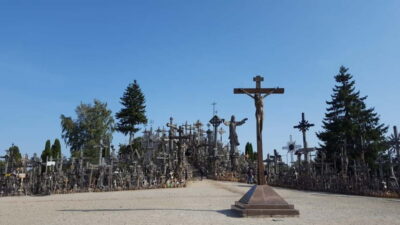
The Hill of Crosses: Full-Day Tour from Vilnius
Read our review →
Tour from Vilnius – Riga via The Hill of Crosses, Rundale, Bauska
Read our review →
From Riga: The Hill of Crosses Private Guided Tour
Read our review →
Private Trip from Vilnius to Riga: Hill of Crosses, Rundale Palace, Bauska castl
Read our review →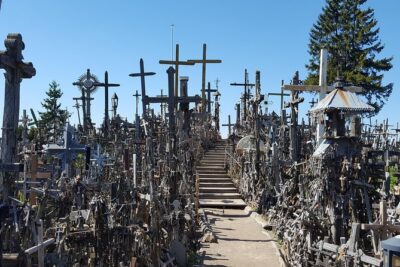
Vilnius to Riga Day Trip: The Hill of Crosses, Rundale Palace and Bauska Castle
Read our review →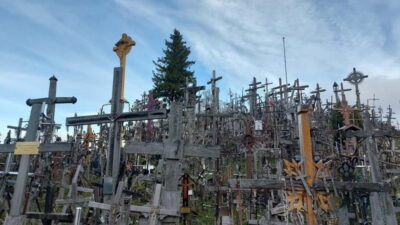
From Riga: Hill of Crosses and Jelgava Day Trip and back.
Read our review →Browse the lists this tour appears in